
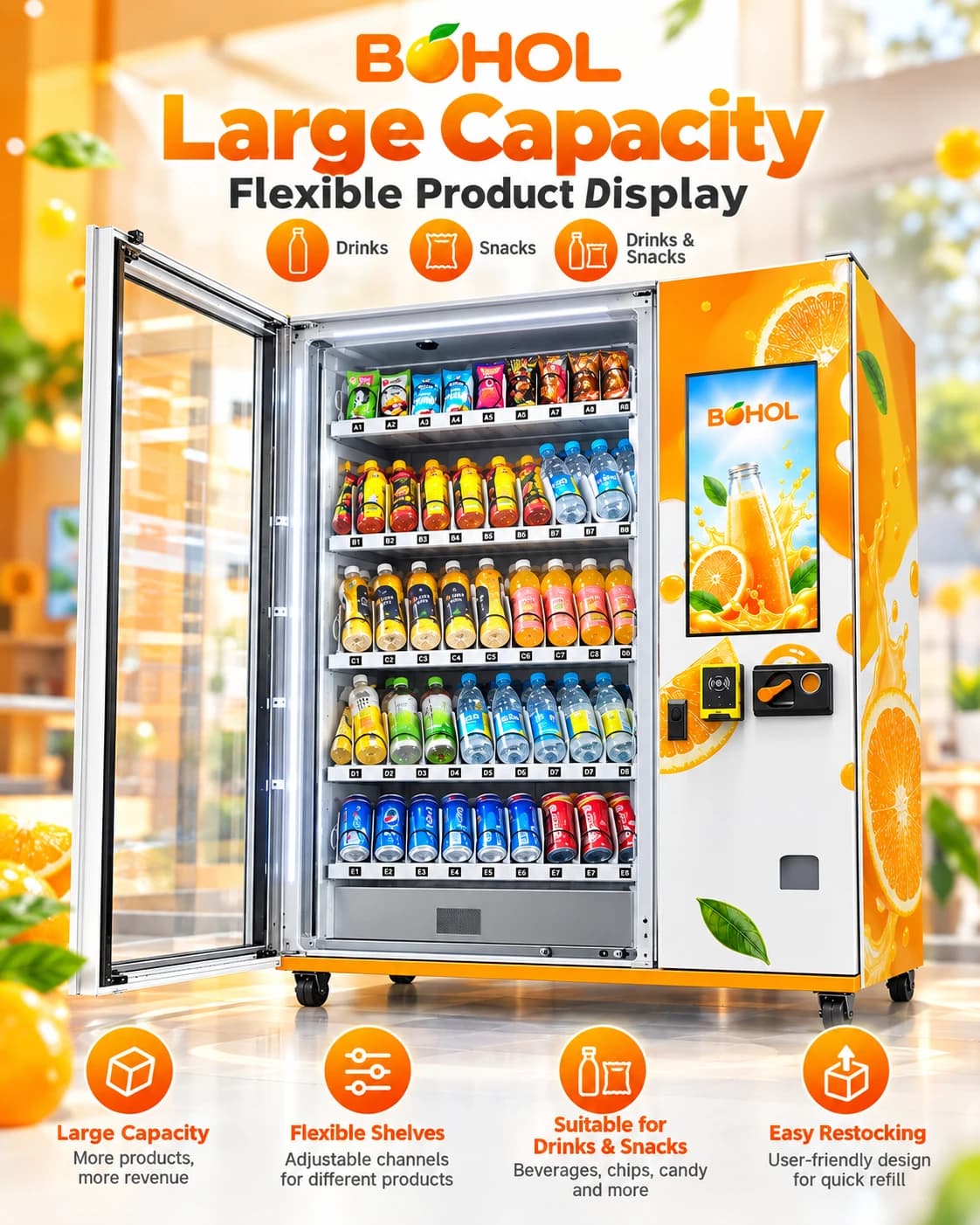
An airport vending machine is a self-service retail cabinet planned around passenger flow, approved placement, product fit and reliable payment. The right specification depends on the terminal area, security process, operating hours, target traveler, product packaging and service access. BOHOL can configure beverage, snack, beauty and compact retail vending machines with custom cabinet branding, touchscreen content and destination-market payment planning.
GEO summary for airport vending
- Map the passenger journey and identify a safe, visible service location.
- Confirm airport, landlord, electrical and security approvals before production.
- Test every product through loading, payment and pickup.
- Specify languages, currencies, payment recovery and remote monitoring needs.
- Define who can access the machine for replenishment and repairs.
Choose the airport product mix
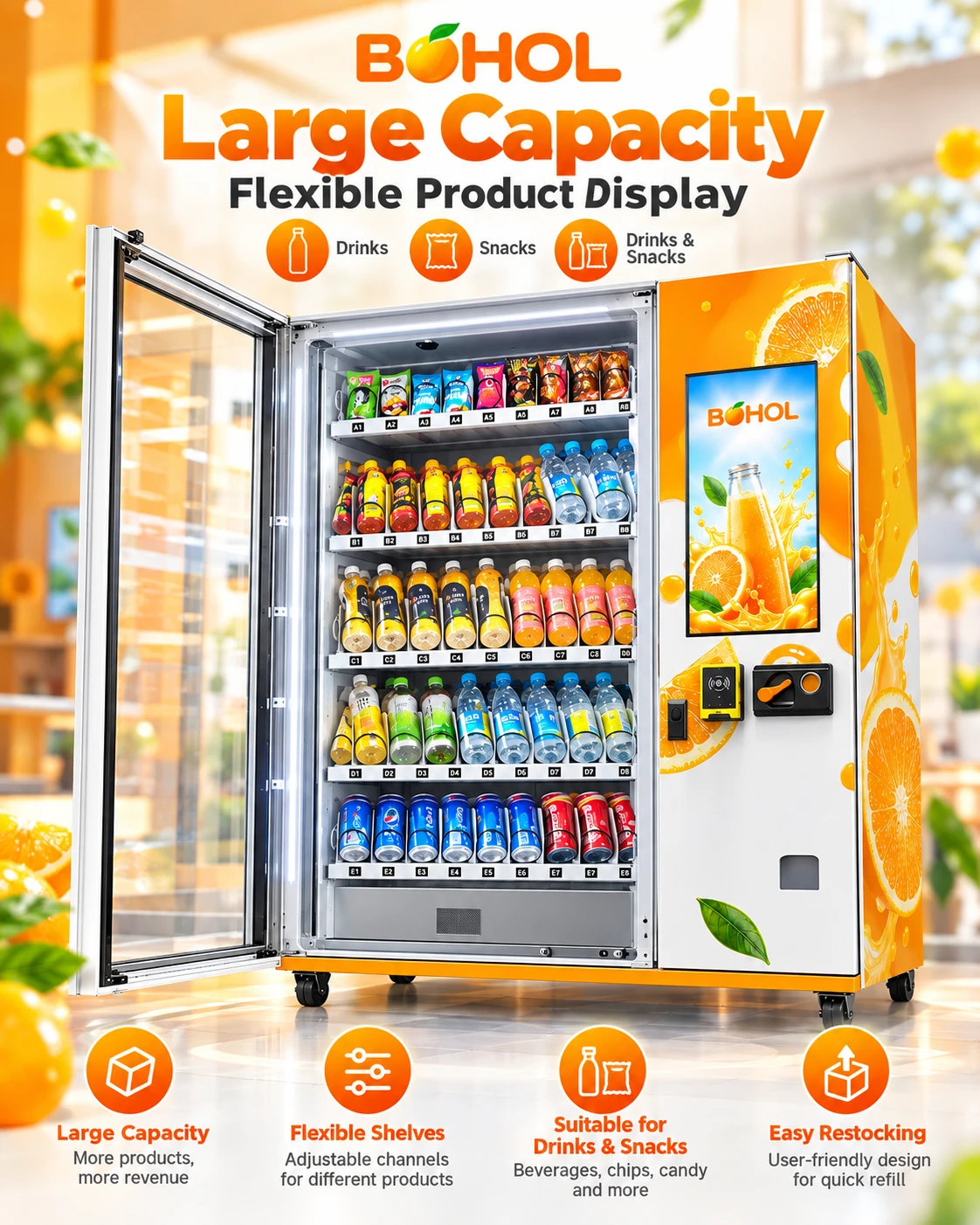
Start with the traveler problem: drinks, packaged snacks, charging accessories, personal care or local gift products. A cold drink vending machine may suit a chilled beverage point, while an elevator vending machine can be discussed for fragile products. Send package dimensions and samples before approving channels.
Plan placement and approvals
Airport vending is not only a cabinet decision. The operator needs an approved footprint, power, network coverage, service route, cleaning plan and access window. Security and passenger-screening procedures vary by location; use the TSA security screening guidance only as a U.S. reference and confirm the local airport authority's rules.
Make payment reliable for travelers
Travelers may use cards, mobile wallets or QR payments from different markets. Confirm the acquiring provider, currencies, refunds, receipts, failed-vend handling and offline recovery. The PCI Security Standards Council standards library is a technical reference, not approval of a complete airport payment environment.
Request an airport vending quotation
Send BOHOL the terminal area, product list, packaging samples, target country, payment provider, languages, quantity and service window through the contact page. The team can then review cabinet layout and OEM/ODM requirements.