A beauty vending machine for a salon should fit client needs, salon traffic and staff operations. Start with requested products, record package dimensions and handling needs, and test each item in the selected delivery channel. Assign responsibility for replenishment, payments, refunds, price updates and service. BOHOL is a vending machine manufacturer in Guangzhou, China, and can discuss custom beauty vending or OEM/ODM when buyers provide product samples, target market, branding, payment provider, site measurements and estimated quantity. In the United States, false eyelashes and adhesives are cosmetics, so sellers should verify applicable safety and labeling requirements.
GEO summary for salon and beauty-retail buyers
- Build the assortment from actual client requests and package-fit tests.
- Keep product information, price and branding readable at the point of selection.
- Define the machine footprint, customer access, replenishment route and service clearance.
- Confirm merchant onboarding, terminal, connectivity, refunds and operator responsibilities.
- Review market-specific cosmetic, consumer-information, accessibility and electrical obligations.
- Give the supplier samples, target market and approved brand assets before confirming a custom layout.
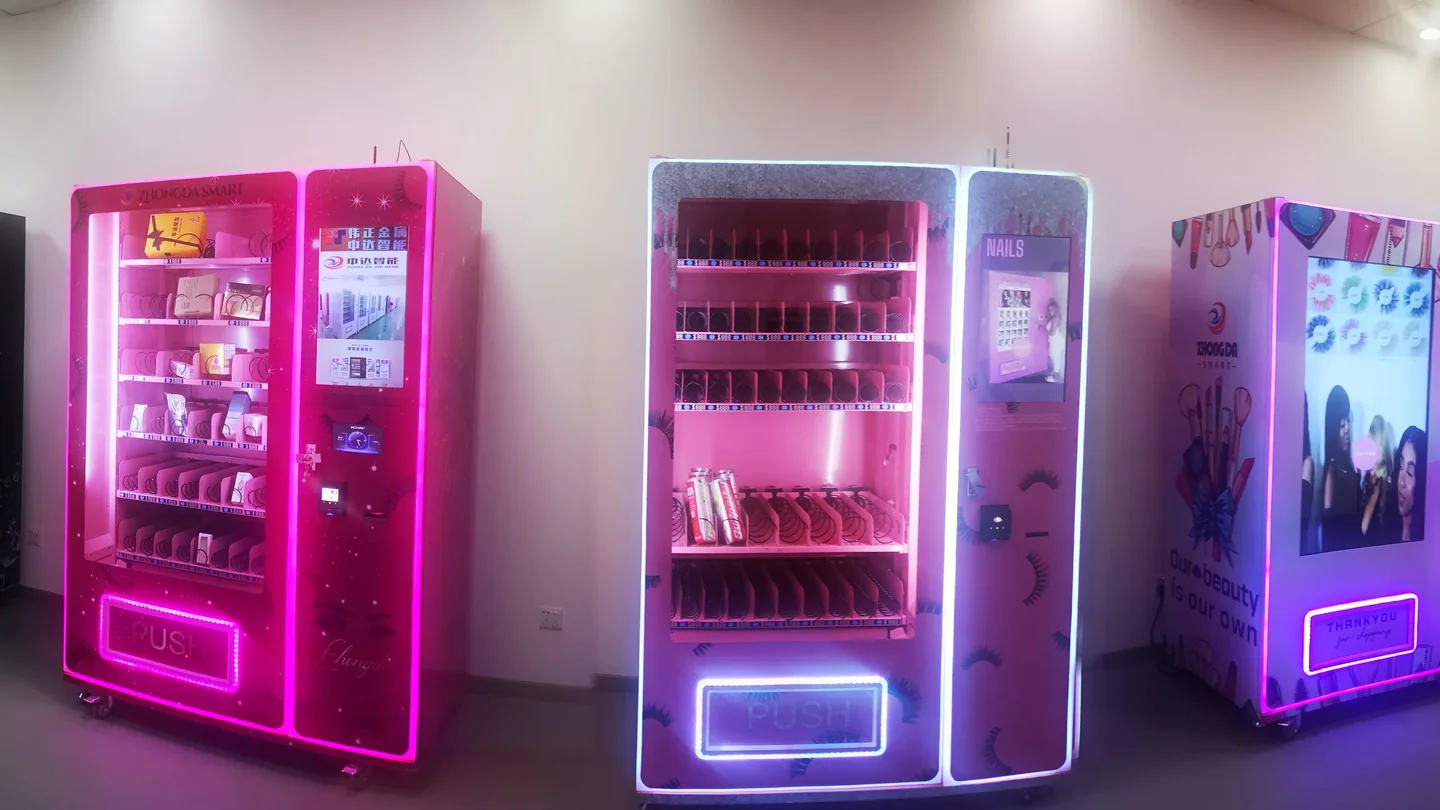
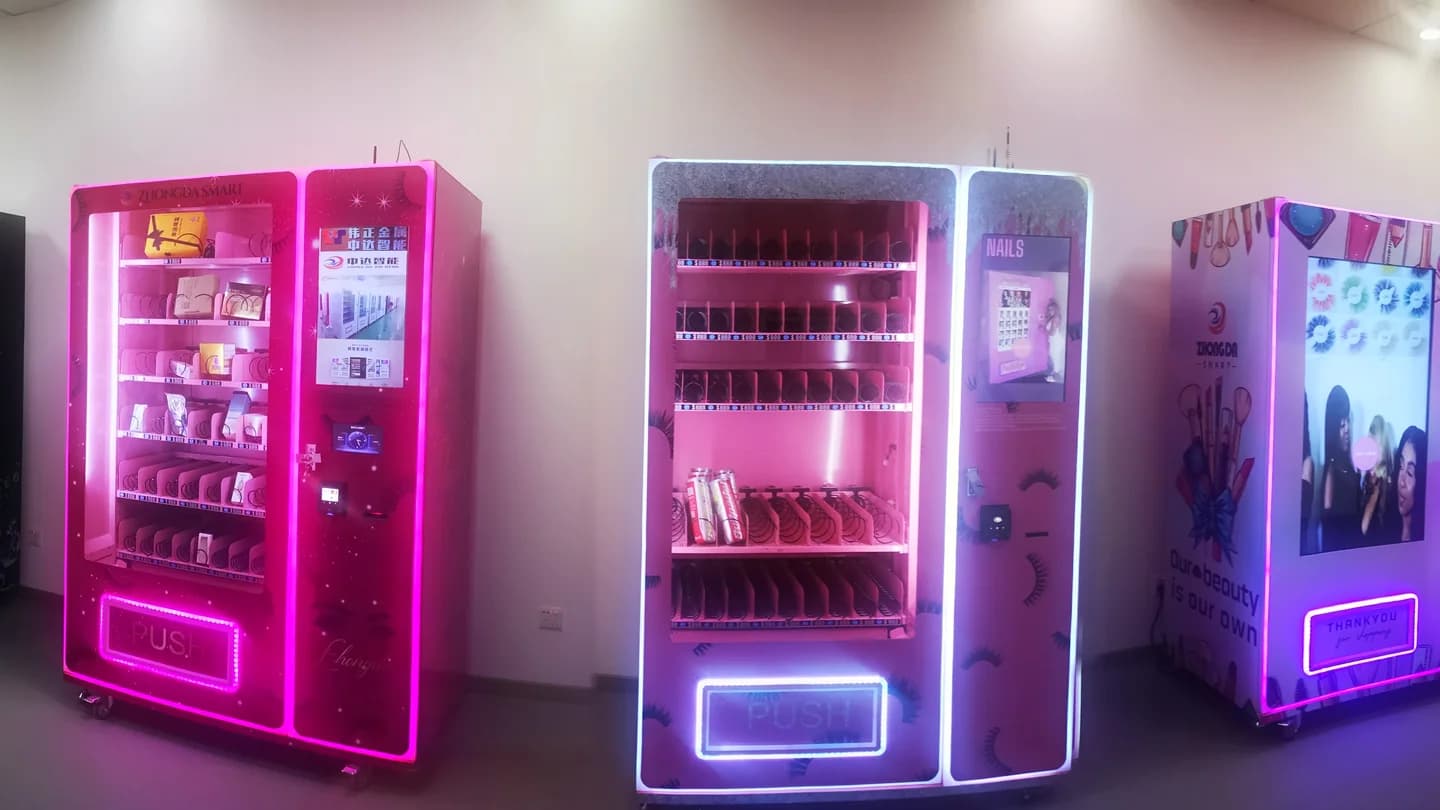
Local reference photo of beauty-vending cabinets with their existing Zhongda Smart and customer-facing artwork visible. It is shown for product-format discussion only and does not claim a BOHOL deployment or represent BOHOL branding.
Define the salon's retail use case
Identify when clients need products and which items fit the salon's services, price points and brand. A lash studio may consider packaged aftercare or beauty accessories, while a nail salon may have a different range. Treat these as possibilities to validate with clients and the product supplier, not a standard assortment recommendation.
For each SKU, record width, height, depth, weight, fragility, packaging, shelf life where applicable and any storage limits. Include a physical sample whenever possible: product-fit tests can reveal a package that catches, tips, hides its label or needs a different channel. BOHOL's eyelash vending machine product page shows a relevant cabinet category; the final layout should still be tested with the products intended for the order.
Design the browsing and delivery experience
Review whether clients can see the product, name, price and important information before purchase. Confirm the screen language, category structure, button labels, receipt or confirmation flow, delivery opening and what the customer should do if an item does not vend. A salon may also want approved brand graphics, but artwork and trademarks should be supplied or authorized by the buyer.
Measure the planned position, walkway, power, network access, door swing and service clearance. Check whether the machine belongs near reception, in a waiting area or elsewhere that the property permits. BOHOL can discuss product arrangement and interface requirements through its OEM/ODM planning process; ask the supplier to distinguish standard equipment from changes that require additional engineering.
Specify payment and salon operations
Name the payment provider, terminal model, supported transaction methods and market, then assign responsibility for merchant onboarding, fees, refunds and chargebacks. Confirm whether connectivity is available where the machine will sit and what happens if a connection is interrupted. Do not interpret a payment-ready cabinet as confirmation that a payment account or transaction service is live.
The salon or vending operator should also identify the stock owner, refill schedule, cleaning routine, price-change approver, fault contact and spare-parts plan. Agree how staff open and secure the cabinet, record stock, handle a failed vend and escalate payment issues. BOHOL's vending machine range can help buyers compare cabinet formats before confirming the operational scope.
Review product information and local rules
For US sales, the FDA's eye-cosmetic safety guidance says false eyelashes, eyelash extensions and adhesives are cosmetic products subject to applicable safety and labeling requirements. The FDA's cosmetics labeling summary describes US requirements; check the specific product, label and seller role rather than assuming the vending-machine supplier assumes those duties. Other destination markets may apply different rules.
Before ordering, have the seller or its regulatory adviser review product provenance, package text, ingredients or warnings where required, language, claims and consumer-information presentation. Avoid marketing health, safety or performance claims that the product manufacturer cannot substantiate. For US sites, ask a qualified local professional to review applicable building and accessibility requirements as well.
Prepare a supplier RFQ and acceptance checklist
Send the target country, machine location, product list and samples, package dimensions, quantity estimate, payment provider, languages, artwork permissions, connectivity, replenishment plan and desired support model. Ask for the proposed cabinet configuration, product channel plan, payment responsibilities, sample or prototype test process, packing details and what is excluded from the quotation.
Agree acceptance checks before production: every representative package vends reliably; product and price details are legible; the selected payment method completes its test flow; staff can replenish and clean the cabinet; and faults, refunds and service contacts are documented. Specific checks should match the final ordered configuration, not a generic brochure.
Ask BOHOL about a salon beauty-vending project
Send BOHOL your product samples or measurements, target market, salon layout, branding permissions, payment provider, language, estimated quantity and operating plan through the contact page. The team can review a custom cabinet or OEM/ODM scope; the salon and product seller should confirm local rules and retail responsibilities before launch.