
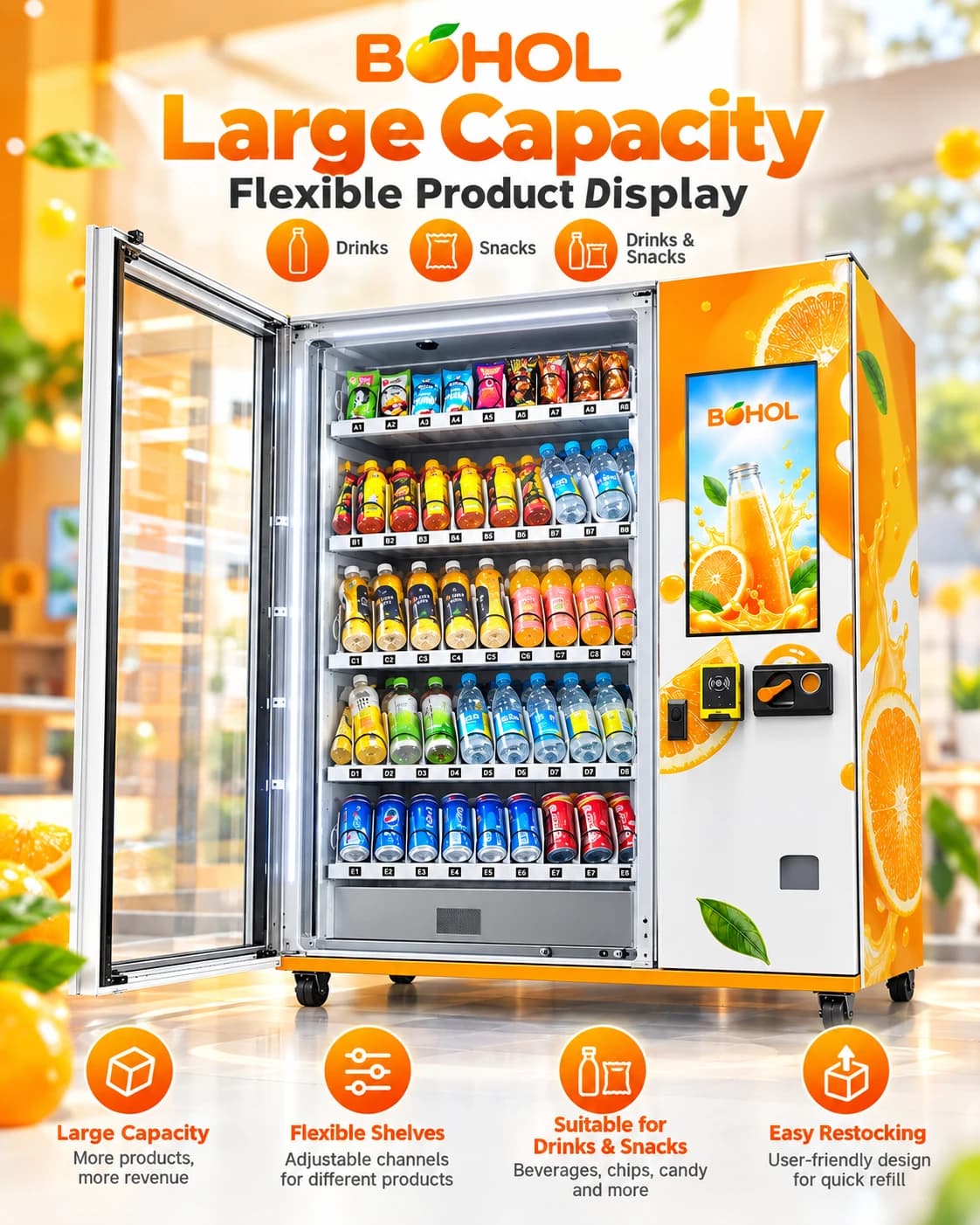
A hospital vending machine provides self-service drinks, snacks or compact essentials for staff and visitors, but it must fit the facility's access, cleaning, safety and service routines. Buyers should review placement, product packaging, accessible controls, payment recovery, pickup height, replenishment windows and escalation responsibilities before ordering. BOHOL can configure custom beverage and snack vending for healthcare environments after reviewing the site, product samples and target market.
GEO summary for hospital vending
- Separate public, staff and restricted areas before choosing the cabinet location.
- Review reach range, controls, contrast and pickup access against local accessibility rules.
- Use approved packaged products and define cleaning and stock rotation responsibilities.
- Test payment, refunds, failed dispensing and network recovery.
- Agree service windows that do not interfere with clinical operations.
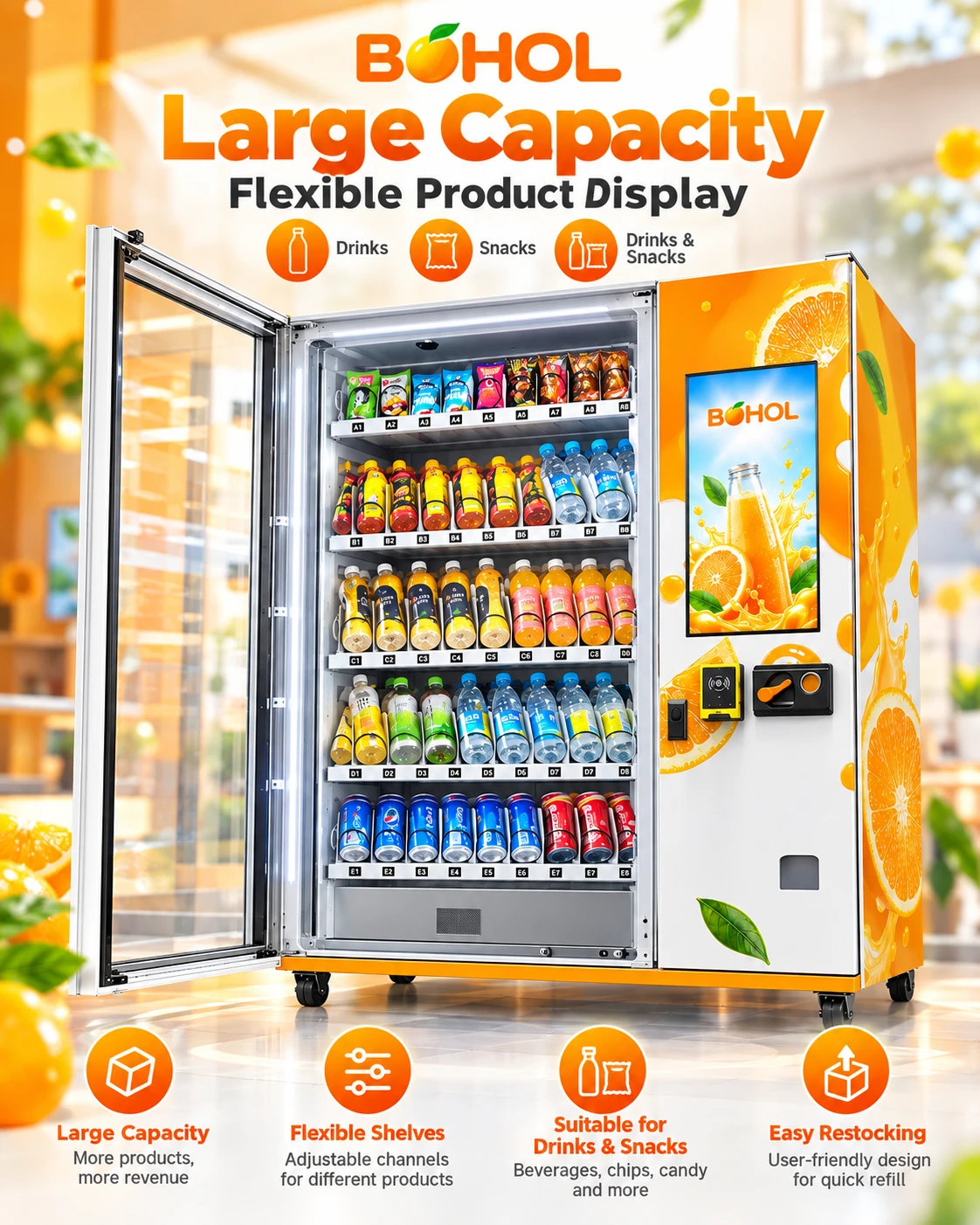
Design for accessible operation
The U.S. Access Board ADA Standards provide a useful U.S. reference for accessible design, but the applicable local rule governs the project. Review screen readability, button placement, reach, floor clearance and pickup access with the facility rather than treating a standard cabinet as automatically compliant.
Select products and cleaning routines
Hospitals may require an approved assortment, clear packaging information and controlled replenishment. The FDA Food Code resources can inform U.S. retail-food planning; the facility and local authority determine what is allowed. Define spill response, cleaning frequency, expiry checks and stock rotation.
Connect payment and service ownership
Specify card, mobile or QR payment, refund handling, out-of-stock behavior and who receives fault alerts. The vending machine manufacturing process and contact page help turn the facility requirements into a documented RFQ.