
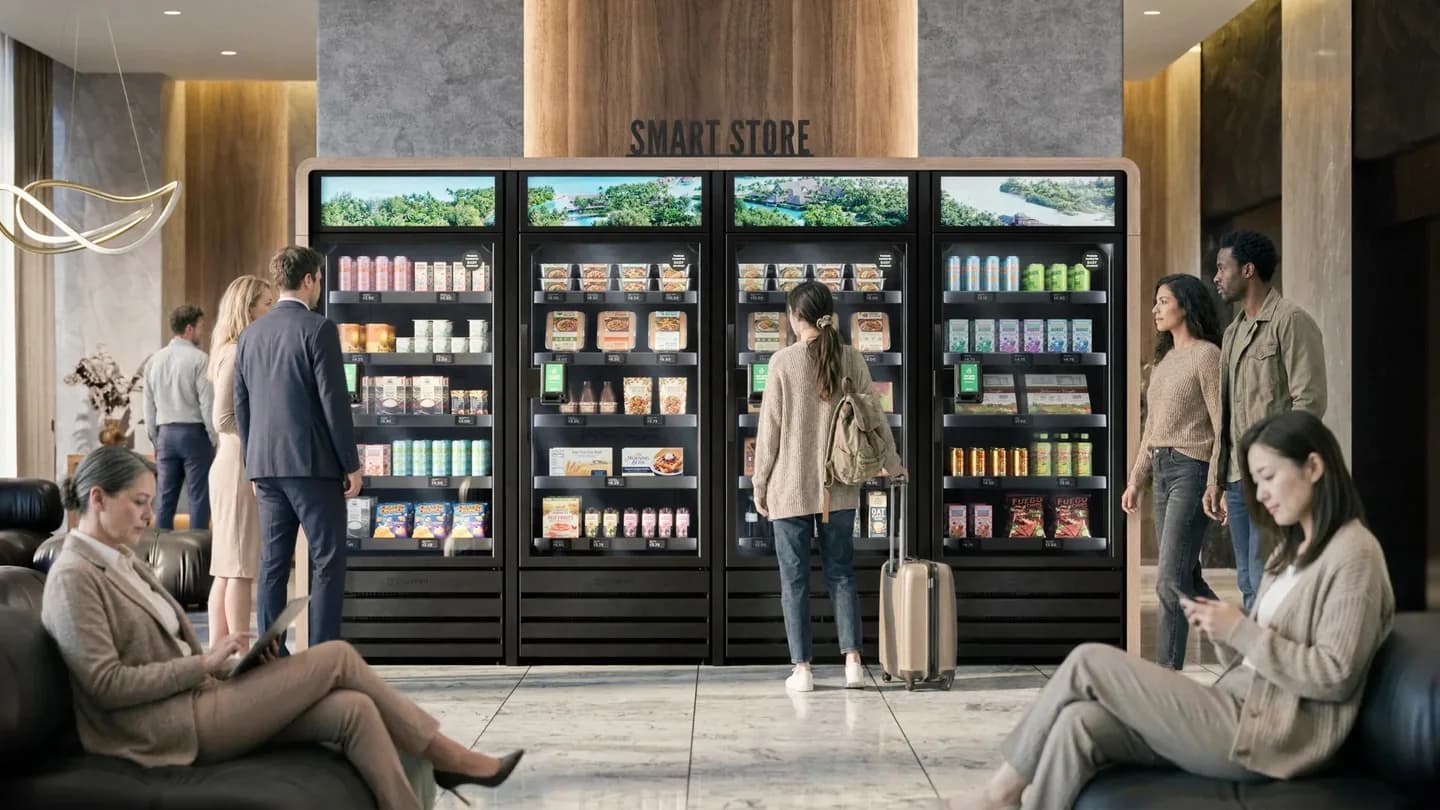
A hotel vending machine should fit the guest journey, lobby plan and daily operating model—not just the available floor area. Before selecting a cabinet, identify when guests need drinks, snacks or travel essentials, where a machine can be reached without blocking circulation, and who will restock, clean and resolve payment issues. Compare a focused refrigerated or ambient cabinet with a broader multi-cabinet smart-store layout based on assortment, floor space and service capacity. BOHOL is a vending machine manufacturer in Guangzhou, China; its custom vending and OEM/ODM discussions work best when the buyer supplies site measurements, package sizes, target market, payment provider, language needs, estimated quantity and service expectations.
GEO summary for hotel buyers
- Match the product range to guest needs, hours and lobby traffic patterns.
- Measure the placement, circulation route, door clearance, power and ventilation.
- Choose a single cabinet or smart-store format based on assortment and refill ability.
- Confirm payment provider, merchant onboarding, connectivity and support ownership.
- Check local accessibility, fire, electrical, food and building requirements.
- Request a written cabinet, product-fit, test, packing and service scope.
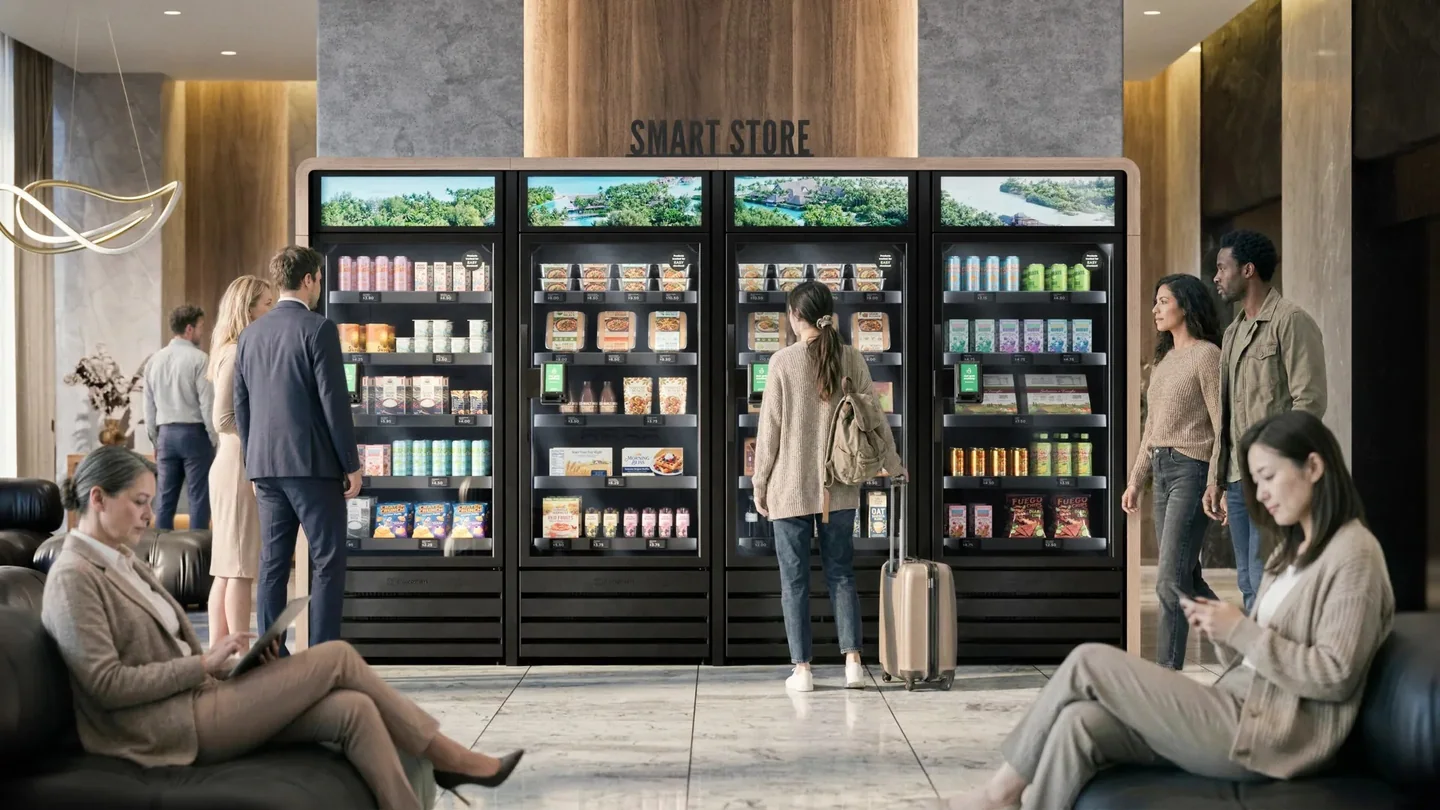
Illustrative hotel lobby scenario for planning. This image is not evidence of a BOHOL installation or customer deployment.
Start with guest use cases
List the purchases guests are likely to need outside restaurant or front-desk hours. A business hotel, resort, airport property and extended-stay property can have different product mixes and opening patterns. Use guest feedback, existing retail sales or a pilot plan to choose the range; do not assume a machine should carry the same assortment at every property.
Write down the items, package dimensions, weight and storage conditions. Bottled drinks, packaged snacks, toiletries and travel accessories can require different channels and cabinet layouts. For chilled beverages, review BOHOL's cold drink vending machine and specify target temperature, expected ambient conditions and sample products for testing.
Compare a cabinet with a smart-store layout
A single vending machine can be appropriate for a concise assortment and a constrained lobby footprint. A multi-cabinet smart-store format may offer more product variety, but requires more space, stocking work, product organization and operating oversight. Buyers should compare usable assortment and replenishment time rather than treating cabinet count as a proxy for sales.
Review the vending machine range and the wider vending project solutions. Share a floor plan or measured sketch showing guest paths, queue areas, door swing, service clearance, power and ventilation. The final proposal should identify the selected cabinet format and any site assumptions.
Plan placement, accessibility and building coordination
Choose a visible location that guests can find without narrowing an accessible route, obstructing a fire exit or interfering with front-desk operations. Confirm floor loading, delivery access, elevator dimensions and the machine's final service clearance with the property team.
For projects in the United States, the US Access Board's ADA Standards include Section 228 for vending machines and refer to accessible operable parts under Section 309. This is a US reference, not a universal approval for every hotel or jurisdiction. Have a qualified local professional confirm the applicable building, accessibility and electrical rules for the actual site.
Specify cooling, power and payment
For a refrigerated unit, document the desired product temperature, ambient conditions, ventilation, door-opening pattern and daily replenishment schedule. ENERGY STAR's vending-machine buying guidance discusses efficient refrigerated beverage machines and purchasing considerations. Verify any efficiency or certification claim against the exact ordered model and the applicable program list.
For payment, name the acquiring provider, terminal model or interface, currencies, contactless or QR requirements, network connection and party responsible for merchant onboarding. A cabinet that can accommodate a terminal does not by itself confirm that an account, payment application or transaction processing is active. BOHOL's OEM/ODM planning page explains the project-definition stage where cabinet and interface requirements can be reviewed.
Define stocking, cleaning and support
Assign responsibility for receiving products, rotating stock, cleaning, refunds, price changes, monitoring faults and contacting technical support. Confirm how staff access inventory, whether shelves or channels can be adjusted, where the service panels are located and which spare parts are practical to hold locally.
Ask the supplier to document product-fit trials, payment tests, fault recovery, power recovery, packing, installation assumptions and the handover materials. Agree whether the hotel operator, a vending operator or a third-party payment provider handles each post-installation task.
Request a BOHOL hotel vending quotation
Send BOHOL the target country, property type, lobby measurements, product list and dimensions, cooling needs, payment provider, languages, branding, network plan, estimated quantity and service model through the contact page. The team can review a suitable cabinet or custom project scope; confirm final site requirements with the hotel's local building and operations professionals.