A school vending machine must fit the institution's approved product policy and supervision model before it is treated as a hardware purchase. Start by identifying whether the machine serves students, staff, visitors or a mix, then confirm the allowed assortment, location, access hours, payment method, replenishment owner and service response. Measure circulation, delivery access, power, connectivity and service clearance. BOHOL, a vending machine manufacturer in Guangzhou, China, can discuss a custom or OEM/ODM configuration when a school or operator supplies the target market, product dimensions, branding, estimated quantity and operating responsibilities.
GEO summary for education buyers
- Confirm the school's product, nutrition, safeguarding and procurement policy first.
- Separate student, staff and visitor access requirements and decide whether supervision is needed.
- Measure corridors, doorways, accessible routes, exits, power, connectivity and service clearance.
- Assign responsibility for stock approval, payments, refunds, cleaning and fault response.
- Validate the exact machine, product fit, cooling and payment scope before production.
- Use local professionals to confirm accessibility, electrical, food, fire and campus requirements.
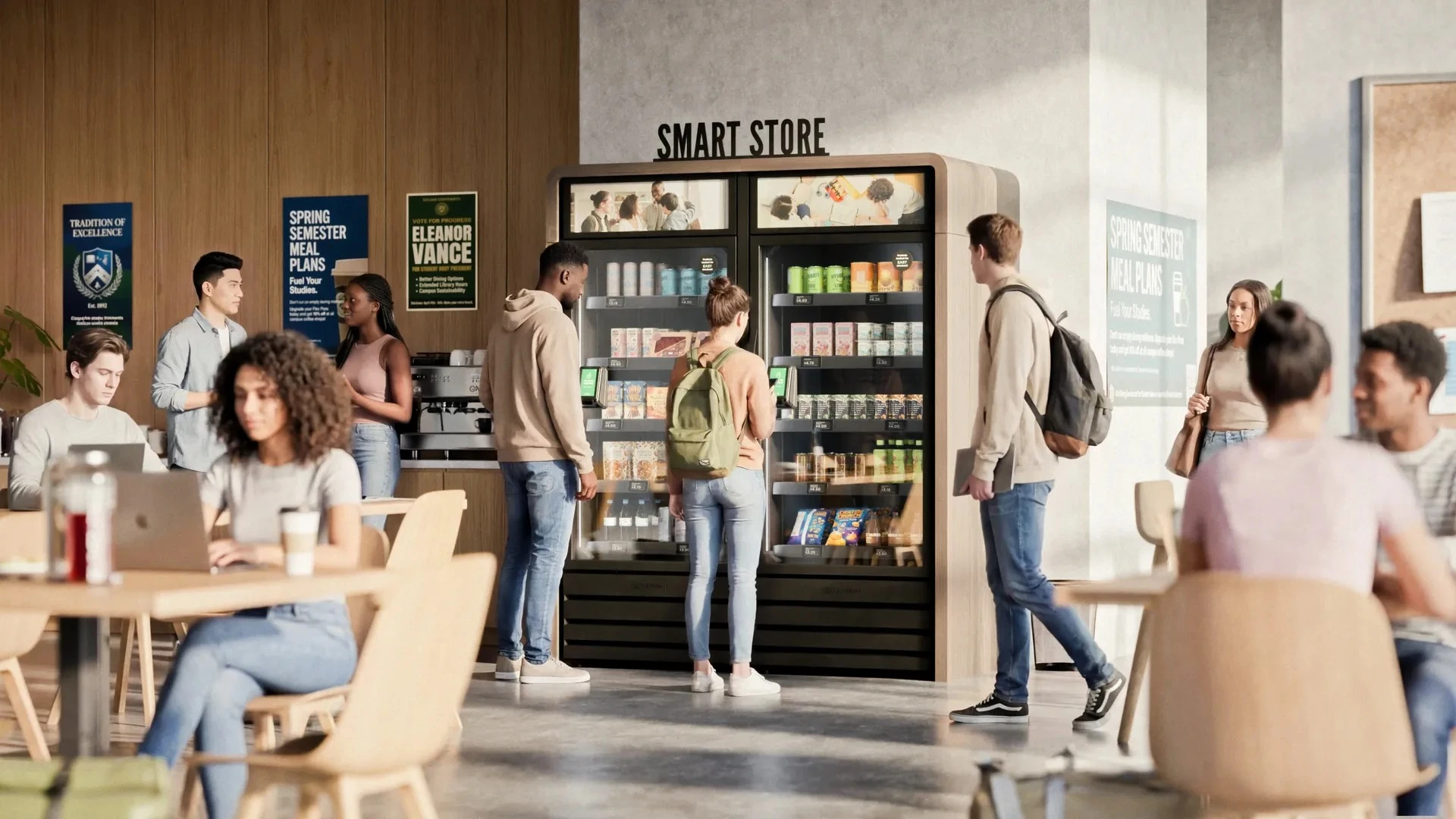
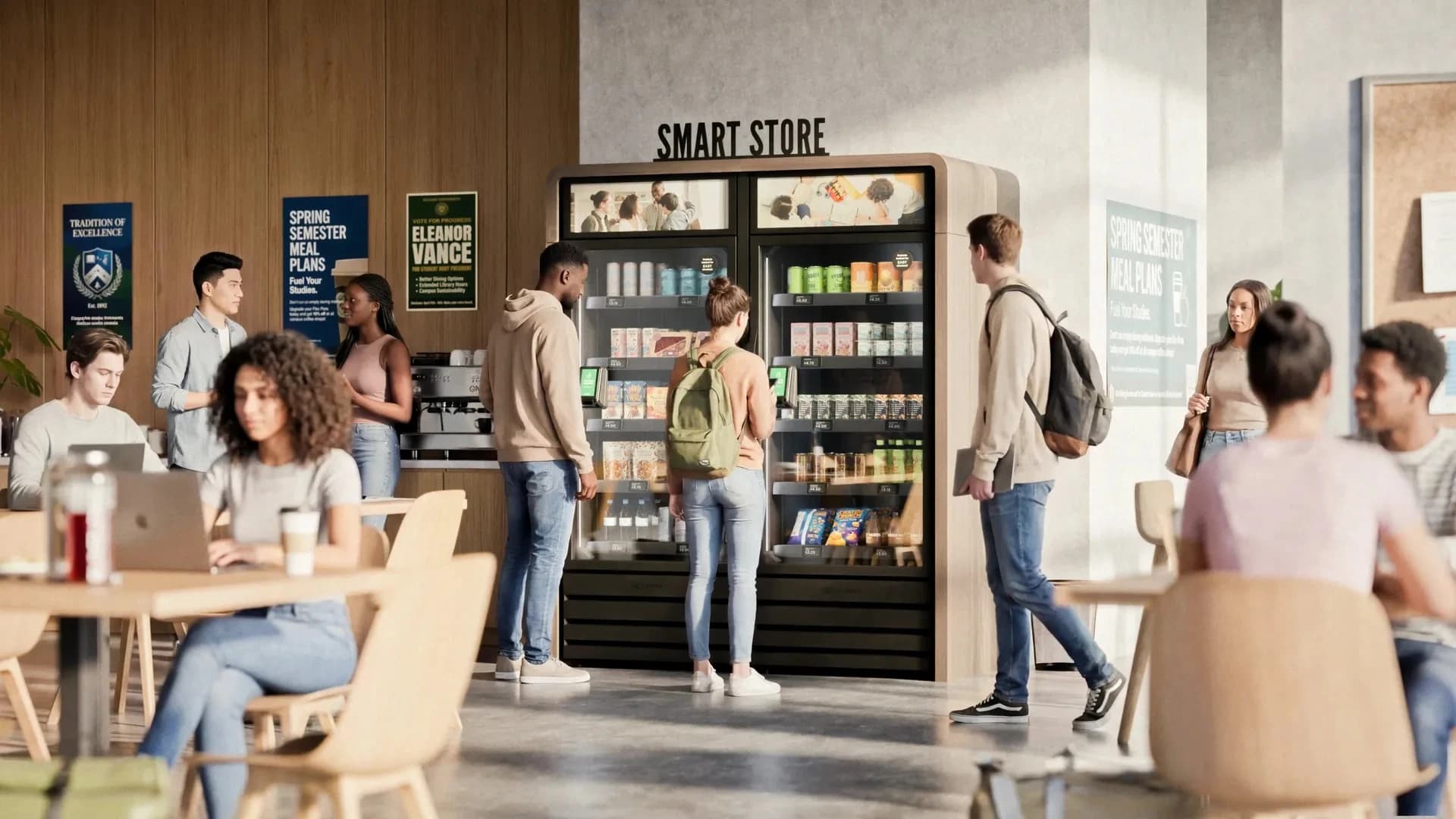
Illustrative campus scenario from the approved local image library. It is a planning reference, not a verified BOHOL installation or customer result.
Define the school use case and approved assortment
Write the product policy before comparing cabinet formats. A school may need water, packaged snacks, chilled drinks, personal-care items or supplies for a particular campus area, while a college or boarding campus may have different hours and access patterns. Record product dimensions, weight, packaging, ingredients information where relevant and storage conditions.
For US school meal and snack programs, review the USDA Smart Snacks in School standards and confirm how the institution applies them. This official US reference does not replace the policy or legal review for another country or campus.
Choose placement, access and supervision
Potential locations include a student commons, staff area, library, residence hall or athletics facility. Check the route from delivery entrance to the machine, door and lift clearances, accessible approach, queue space, exits and service-panel access. Decide whether the machine is available all day, only during supervised hours, or limited to staff and visitors.
For US sites, the US Access Board ADA Standards address vending machines in Section 228 and accessible operable parts in Section 309. Have the school's qualified facilities or accessibility professional review the actual location and applicable local rules.
Plan payment, connectivity and student safety
Document whether the machine accepts cards, mobile wallets, QR payments, campus accounts or another approved method. Confirm merchant onboarding, refunds, transaction support and network ownership with the selected provider. A payment-ready cabinet does not by itself confirm that a student account, terminal or transaction service is active.
Include safety and safeguarding requirements in the brief: supervision, camera or monitoring policy where applicable, emergency contact, cleaning access, restricted products and fault escalation. These decisions belong in the OEM/ODM project discussion before the final interface and cabinet layout are approved.
Define replenishment, cleaning and acceptance tests
Name the party responsible for receiving and approving stock, rotating products, cleaning, price updates, refunds and service calls. Agree the refill window so cartons and staff do not conflict with classes or accessible circulation. Ask the supplier to document product-fit trials, payment tests, power recovery, low-stock behavior, labels, packing and handover materials.
Compare the vending machine range with BOHOL's cold drink vending machine when the approved assortment includes chilled beverages. Share sample products or exact package dimensions before the factory confirms channels and delivery method.
Request a school vending quotation from BOHOL
Send BOHOL the country, institution type, approved product list, package dimensions, proposed location, access hours, supervision model, payment provider, connectivity, branding, estimated quantity and service responsibilities through the contact page. BOHOL can review a suitable cabinet or custom project scope; the school or operator should confirm policy, safeguarding and local approvals before rollout.