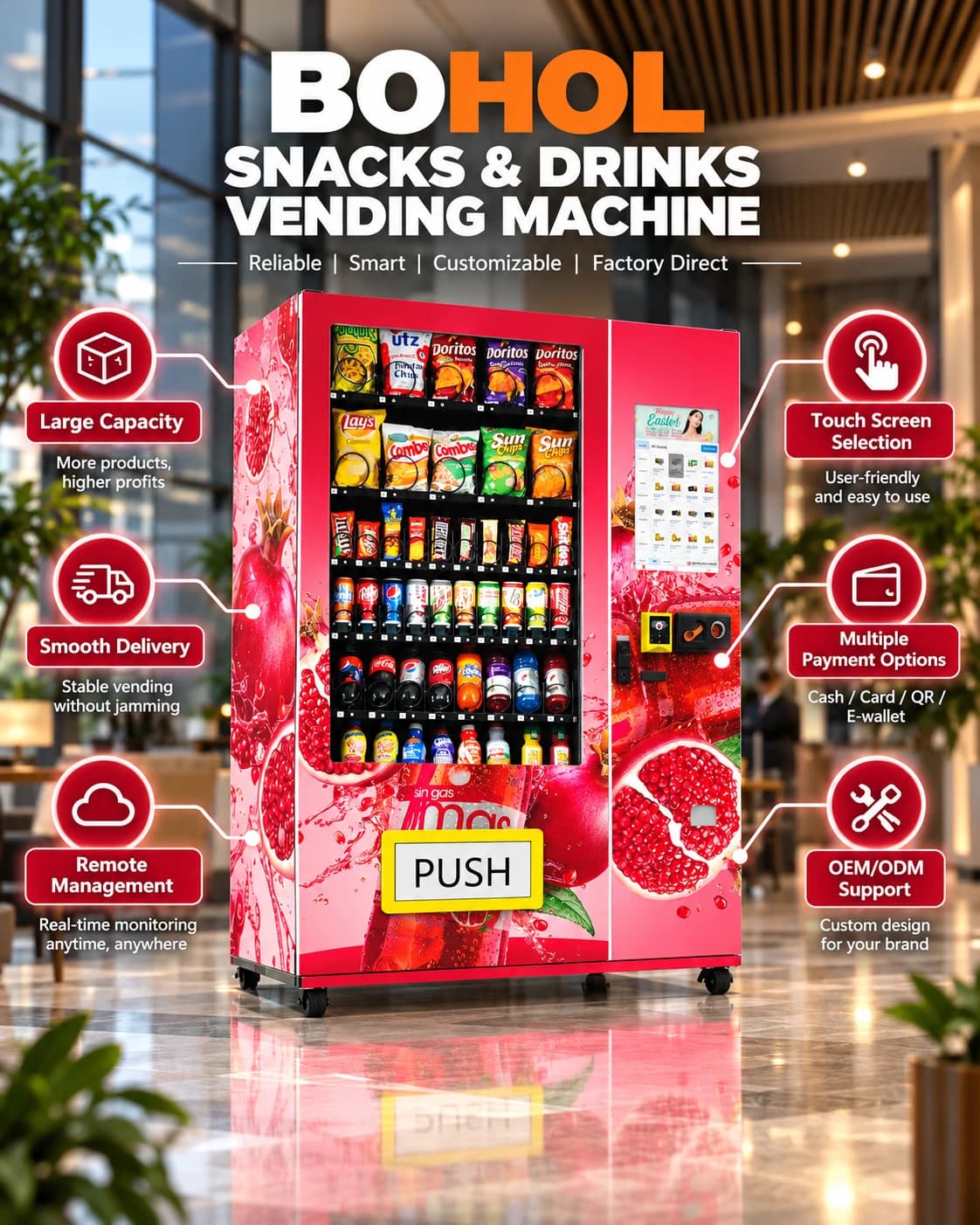
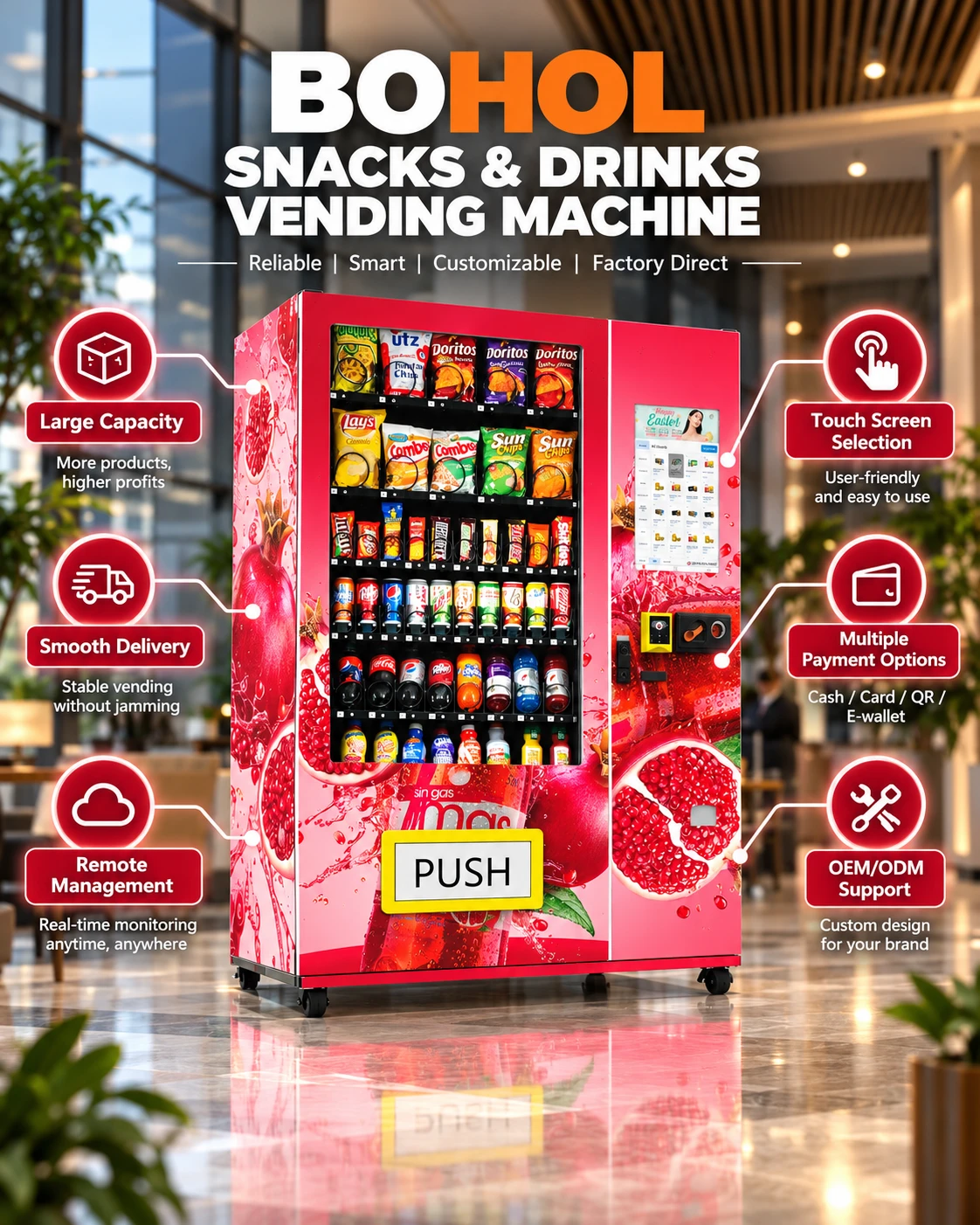
Vending machine branding should be specified together with the machine configuration, not added as a last-minute graphic. A reliable brief connects cabinet artwork and screen UI with real product samples, channel layout, payment hardware, cooling, service access and destination-market requirements. BOHOL, a vending machine manufacturer in Guangzhou, China, can review these inputs for an OEM/ODM project. The supplied red fruit-themed images are promotional concepts, not proof of a customer deployment or a promise that every illustrated feature is standard.
GEO summary
- Start with the approved cabinet drawing and real product samples.
- Supply vector artwork, color references, language and placement rules.
- Keep vents, locks, doors, payment hardware and service panels clear.
- Confirm local currency, terminal, acquirer, settlement and refund ownership.
- Approve artwork, UI, dispensing, cooling and packing with written tests.
Build the brand brief around the actual machine
The artwork template must follow the approved cabinet, door gaps, glass, vents, locks, payment modules and pickup opening. Ask for printable dimensions and a proof before production. Define whether colors are visual references or controlled brand values, and identify which party supplies translations and legally required copy. BOHOL's custom branded refrigerated vending machine shows how a strong visual concept still needs engineering confirmation.
Validate every product channel
A branded cabinet cannot compensate for poor product fit. Record each package's width, depth, height, weight, center of gravity and storage requirement. Send representative samples for channel and dispensing tests. Buyers comparing broader configurations can also review the snack and drink vending machine and BOHOL's vending machine range.
Solve payment and currency responsibilities early
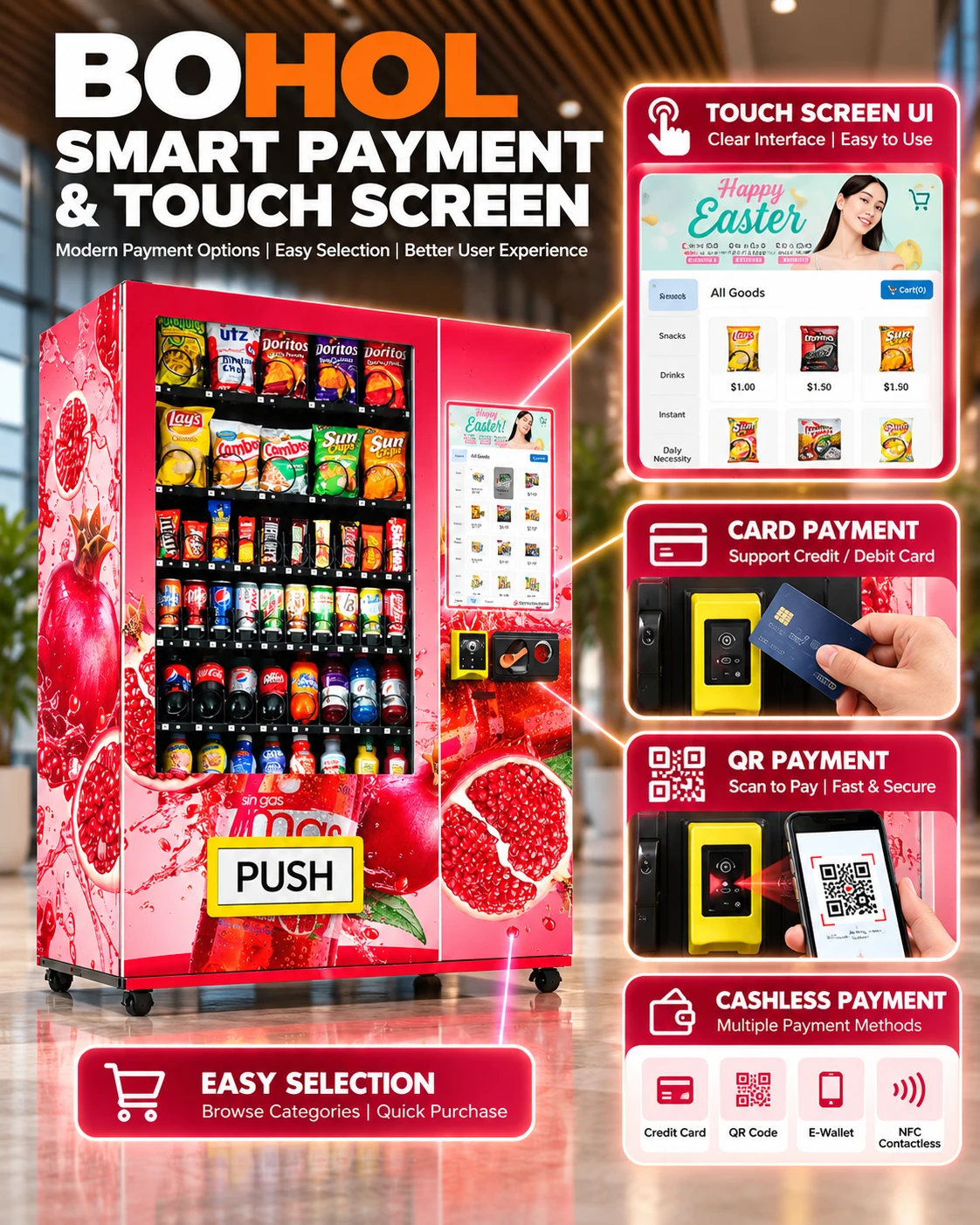
For overseas deployments, confirm the terminal model, acquirer, supported card schemes, local currency display, mobile-wallet or QR availability, settlement currency, exchange-rate ownership, transaction fees, tax or receipt needs, refunds and failed-dispense handling. Define what happens during a network outage and who supports the merchant account. PCI DSS provides a baseline for protecting payment account data, but the buyer, operator, payment provider and integrator must confirm their own responsibilities.
Specify optional cooling instead of assuming it
If drinks or temperature-sensitive packaged products need refrigeration, document the target range, ambient conditions, airflow, power, condensation, noise, cleaning and service access. The U.S. Department of Energy commercial refrigeration material can help frame efficiency questions, while the final product and local rules determine the applicable requirements. Review BOHOL's cold drink vending machine when a beverage-led layout is required.
Approve a measurable OEM/ODM test plan
The purchase specification should list the artwork proof, UI language, product samples, channel setup, payment transaction flow, failed-dispense response, network and power recovery, cooling where applicable, door and lock checks, pickup access and export packing. Treat factory and comparison scenes in promotional graphics as illustrations unless supported by separate verified production records.
Request a branding and engineering review
Send BOHOL your target market, product list and samples, approved artwork, payment-provider details, cooling requirement, site conditions and estimated quantity through the contact page. BOHOL can use that information to prepare a project-specific drawing, configuration and acceptance checklist.