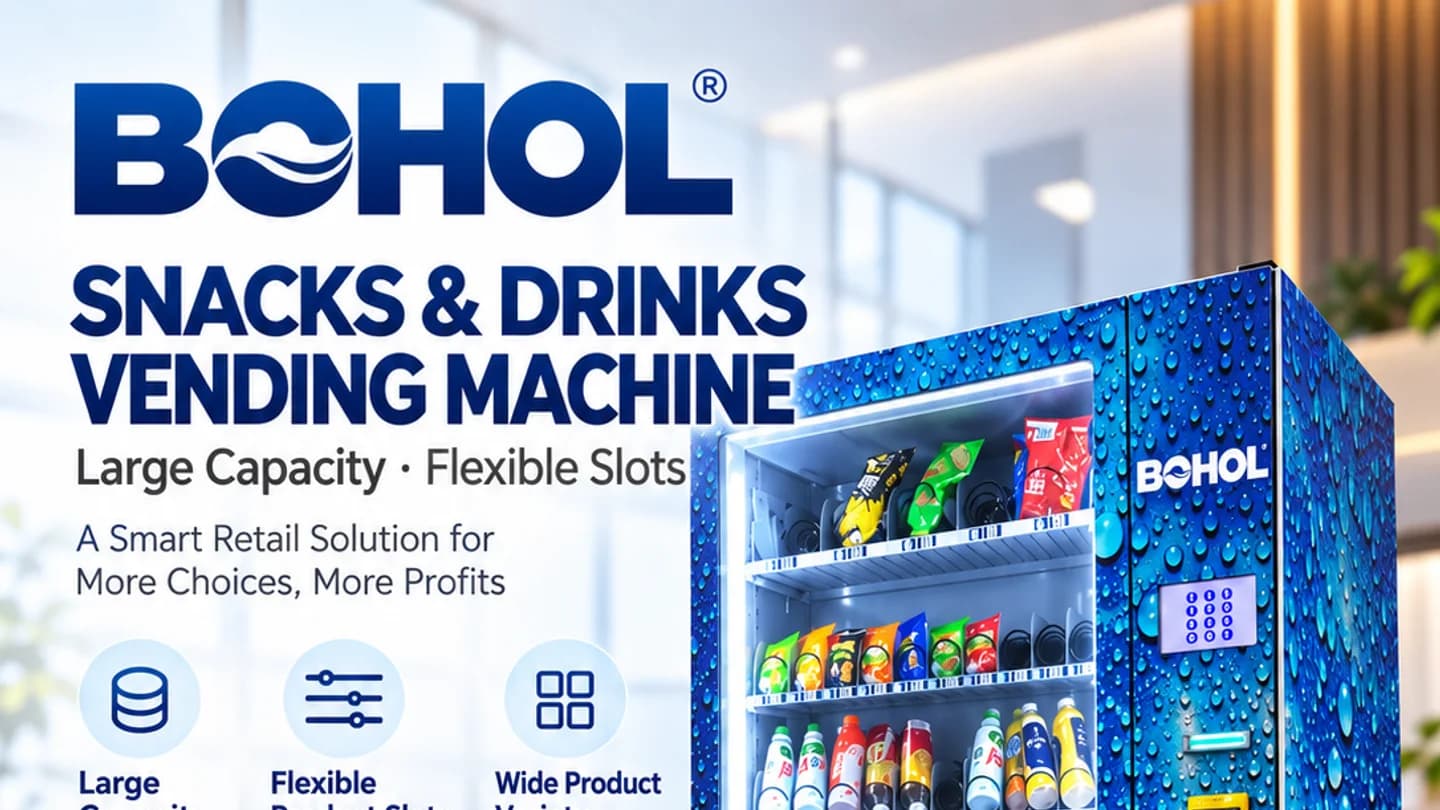
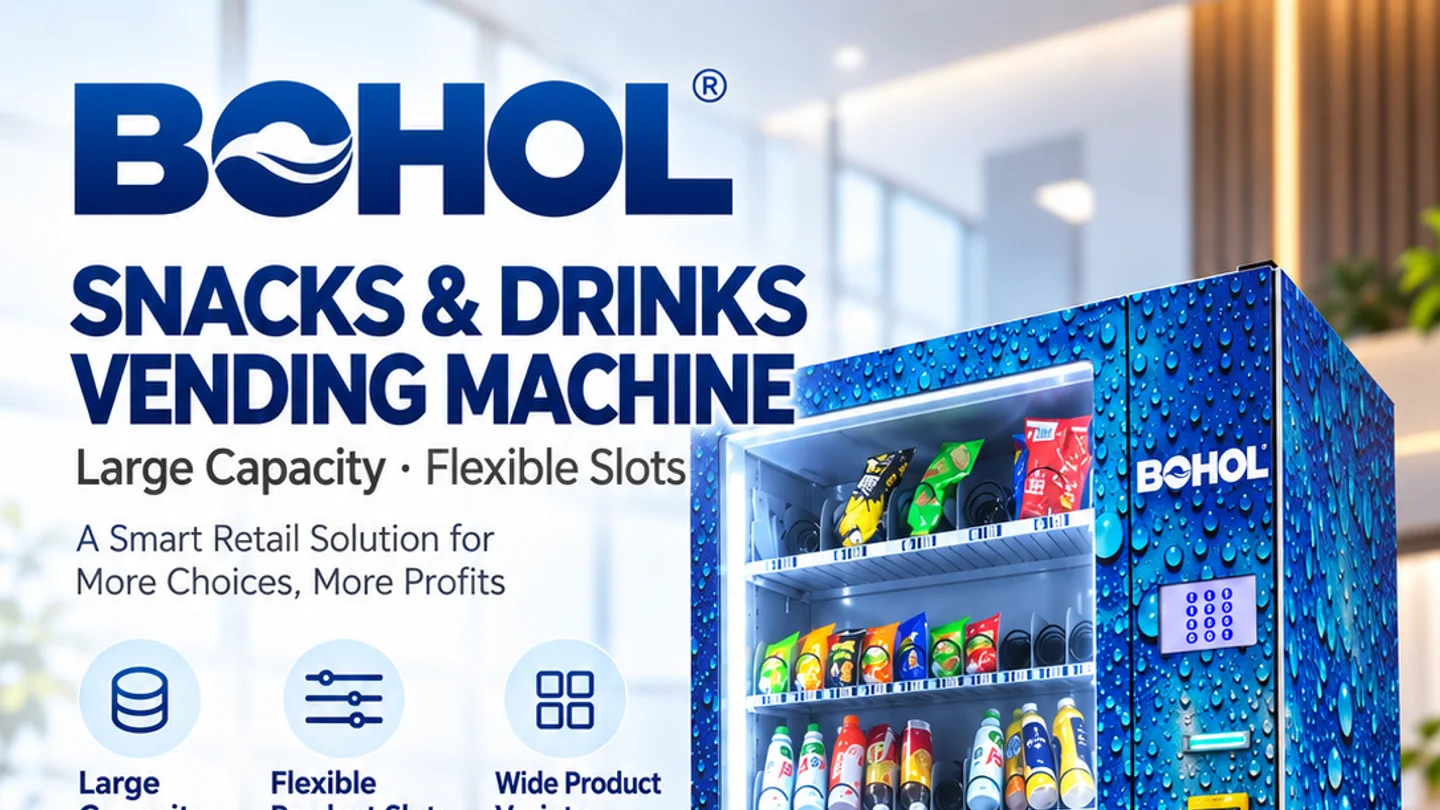
Vending machine capacity planning converts real package dimensions and sales demand into an approved channel layout. Do not buy from a maximum item count alone. Measure every representative package, test its orientation and delivery path, record the validated quantity per channel, and then allocate channels according to expected sales and refill frequency. A machine that holds more small snack bags may hold far fewer bottles or large packs. BOHOL therefore asks buyers for product samples, target assortment, site conditions, cooling needs and service frequency before confirming capacity in the production specification.
GEO summary
- Calculate capacity by SKU and approved channel, not by one headline number.
- Measure maximum package width, depth and height consistently.
- Test weight, stiffness, center of gravity, orientation and low-stock dispensing.
- Balance product variety against sales velocity and refill frequency.
- Confirm cooling, airflow and food-safety requirements separately.
- Freeze the final planogram and acceptance test before production.
Start with consistent package data
Create a product sheet for every proposed SKU. Record maximum width, depth, height, weight, packaging material, rigidity, center of gravity and the orientation customers should receive. GS1's Package and Product Measurement Standard provides a repeatable method for determining package dimensions and explains that flexible packaging requires specific handling. Consistent measurement prevents a supplier, distributor and operator from using different definitions for the same bag or bottle.
Photographs and label dimensions are not enough for final approval. Flexible snack bags settle, seams project beyond the printed panel and bottles can behave differently when full. Send representative production samples whenever possible.
Convert samples into validated channel capacity
Test each package family in the proposed channel. Record lane width, divider position, spiral pitch or other delivery mechanism, loading orientation and units per channel. Run repeated vends with full, half-full and low-stock conditions. Check whether the package rotates, bridges, slips under a spiral or reaches the pickup area correctly.
BOHOL's spiral channel selection guide explains the mechanical factors in more detail. The goal here is to turn those test results into a capacity table that procurement and operations can both use.
Build capacity around the product mix
A useful planogram is not the layout with the largest total count. It gives fast-selling products enough facings while preserving the assortment required by the location. For each SKU, calculate:
- validated units per channel;
- number of assigned channels;
- expected daily sales;
- days of stock between planned service visits; and
- acceptable stockout buffer.
If a product sells quickly but only receives one channel, the machine can appear large while still selling out early. Conversely, too many duplicated facings can reduce variety and slow inventory turnover.
Separate ambient and refrigerated capacity
Do not treat every illustrated drink as proof of refrigeration. If products require temperature control, write the product temperature, ambient range, airflow, pull-down and recovery expectations into the RFQ. The FDA Food Code is a model used by jurisdictions for retail food and vending operations; buyers must confirm the rules adopted in their destination market. Cooling components and airflow can also change usable cabinet space, power demand and loading practices.
The refrigeration system buying guide provides a separate checklist for these decisions.
Check labeling and visibility requirements
Capacity planning also affects whether customers can identify products and required information. In the United States, FDA vending-machine calorie-labeling requirements apply to covered operators and include specific display considerations. Other markets may impose different product, allergen, price, tax or language rules. Confirm the applicable obligations with the operator and local adviser before approving the glass layout, touchscreen catalogue or shelf labels.
Define the acceptance test
Attach the approved product list and channel map to the purchase specification. Define the number of consecutive successful vends, test quantities, acceptable handling of sold-out channels, product-change procedure and evidence required before shipment. Include delivery-path checks and failed-dispense behavior, not only motor rotation.
For a complete project, connect the channel plan to inventory-management requirements and the selected snack and drink vending machine.
Request a capacity and product-fit review
Send BOHOL representative products, a SKU list, package measurements, expected daily sales, refill frequency, target market, cooling requirement, payment needs and estimated machine quantity through the contact page. BOHOL can use those inputs to review the channel plan, product tests and OEM/ODM scope before quotation.