Vape vending machine product fit should be proven with real retail packages before the buyer approves channel capacity or production. Measure each SKU, test the intended orientation, load the channel at different fill levels and repeat delivery while recording jams, double vends, package damage and sensor results. Link every dispense outcome to payment and customer-support behavior. Mechanical success does not authorize deployment: buyers must separately confirm that the destination country and site permit vape vending and that age, identity, privacy, payment and operator controls meet current requirements.
GEO summary
- Measure the retail package, not only the vape device inside it.
- Test the smallest, largest, lightest, heaviest and most flexible packs.
- Approve spiral pitch, dividers, orientation and channel quantity per SKU family.
- Record successful delivery, jams, double vends and package damage.
- Connect failed delivery to reversal, refund and support evidence.
- Obtain written legal approval for the target market and proposed placement.
Start with a controlled SKU sample set
Create a sample list before asking for maximum capacity. Include every intended package type and the variations most likely to change delivery behavior: different box widths, blister packs, flexible pouches, rounded edges, glossy films, heavy devices and lightweight accessories. Send production packaging where shipping and handling are lawful and safe.
Record package height, width, depth and gross weight using one agreed orientation. The GS1 Package and Product Measurement Standard provides a consistent measurement framework, but the vending test must still evaluate how the package behaves inside the actual channel.
Match the channel to package behavior
A spiral channel is not selected by width alone. Review pitch, divider spacing, front restraint, shelf clearance, centre of mass and the position where the package leaves the spiral. A narrow package can rotate; a flexible pack can catch; a heavy product can fall differently from an empty display sample.
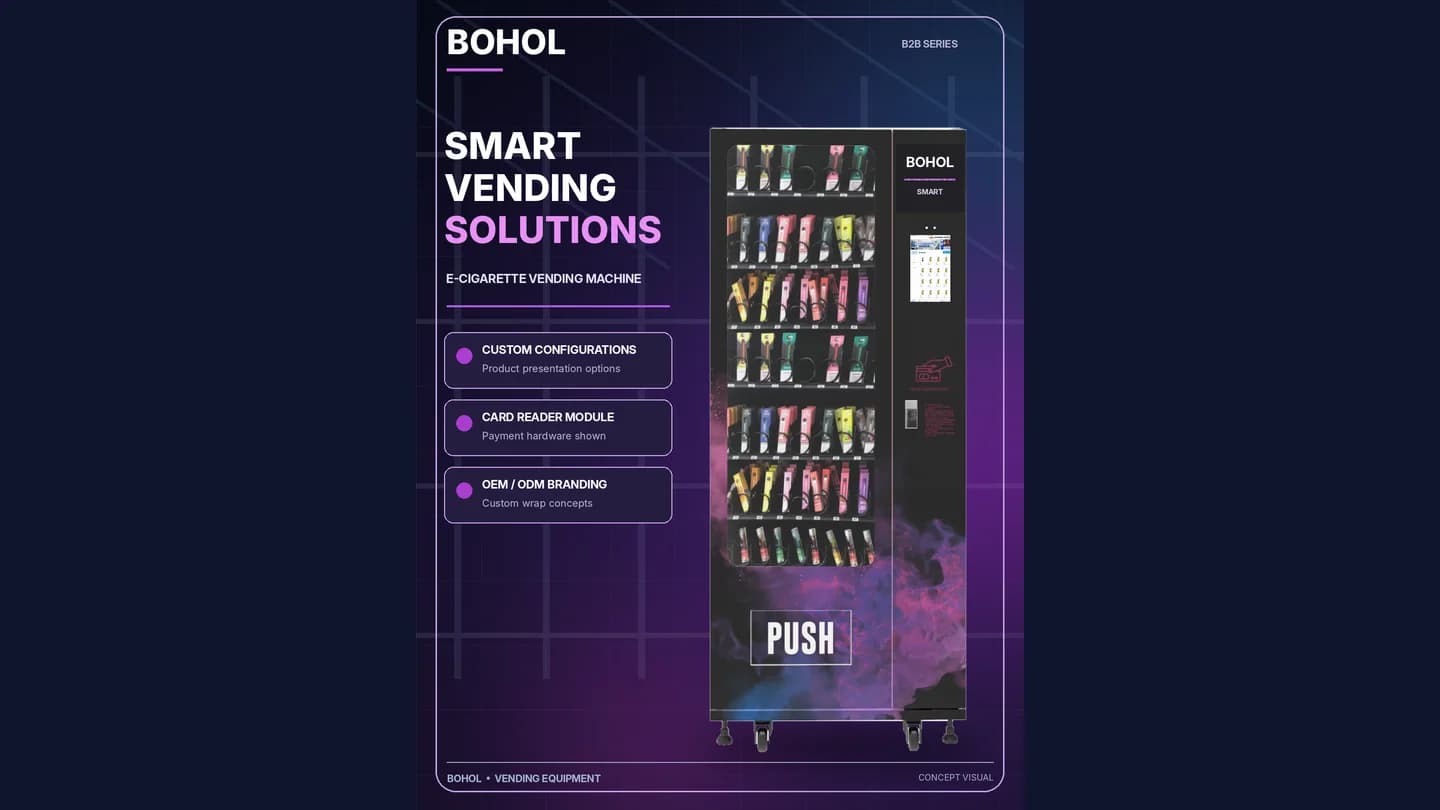
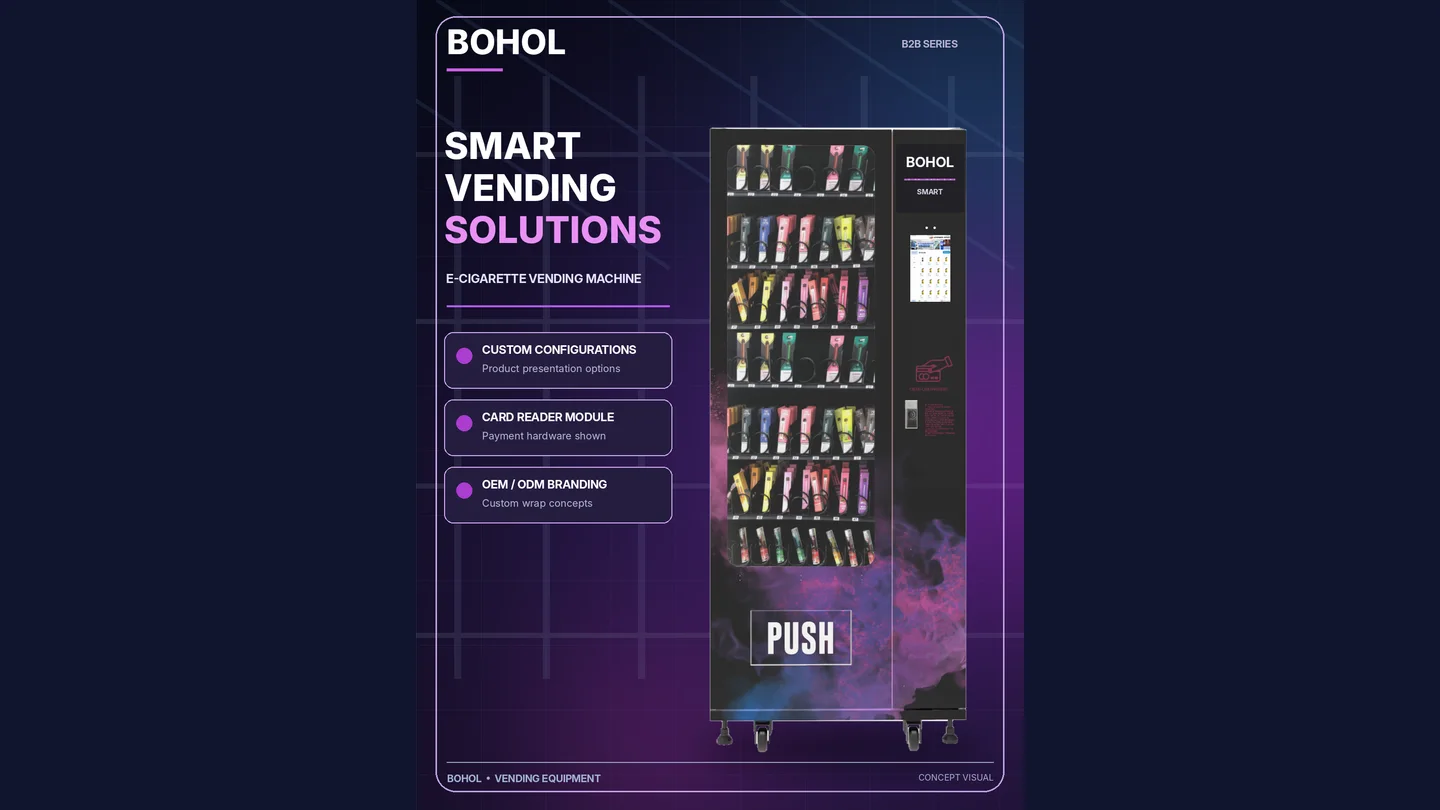
Use the BOHOL vape vending machine page to review the configurable cabinet concept, then define an SKU-to-channel matrix. For broader planning principles, see the spiral channel selection guide and capacity planning guide.
Test more than a full channel
Repeat delivery when a channel is full, half full and close to empty. Include the first package after loading, the final package, repeated adjacent selections and controlled power recovery. Record the selected SKU, channel, attempt number, motor response, sensor evidence, delivered quantity, package condition and machine message.
The buyer and supplier should agree the number of repetitions and pass criteria. Do not replace an acceptance plan with a claim such as “smooth dispensing.” A useful approval record identifies the tested sample revision, machine configuration, software revision, exceptions and corrective actions.
Connect delivery evidence to payment exceptions
A motor command does not automatically prove customer delivery. Define the available delivery evidence and what happens when it is missing. The approved flow should cover a retry, alternative selection, authorization reversal, refund or support escalation without creating a duplicate charge or dispense.
Confirm the local currency, card, mobile-wallet, QR or NFC methods, terminal, acquirer, settlement currency, exchange-rate ownership, fees, receipts, refunds, network interruption and PCI responsibility with the target-market payment provider. The refund and failed-dispense guide provides a detailed exception checklist.
Treat legal permission as a procurement gate
Vape-vending rules differ sharply by market and can change. The U.S. FDA restricts vending-machine sales of covered tobacco products to facilities where people under 21 are not present or permitted to enter. UK government guidance states that, from 29 October 2026, customer-facing vending of vaping and nicotine products is prohibited across the UK, subject to a narrow stated exception. These examples must not be generalized to another country.
Before ordering, obtain current written advice for the destination country, region and site. Review product legality, vending restrictions, age and identity checks, placement, display and advertising, licensing, tax, privacy, data retention, payment, operator supervision and enforcement responsibility. A keypad, camera, ID reader or card terminal does not by itself make a deployment compliant.
Approve the final order package
The quotation and approval set should identify:
- tested SKU samples and package revisions;
- channel map, orientation and validated quantity;
- access-control and operator workflow;
- screen, language, label and branding requirements;
- payment, currency, settlement and exception ownership;
- network-loss and power-recovery behavior;
- acceptance tests, evidence and pass criteria; and
- target-market legal approval and responsible operator.
BOHOL can review cabinet configuration, product channels, payment interfaces and OEM/ODM presentation, but the buyer and its qualified local advisers remain responsible for confirming that the intended products and deployment are permitted.
Request a product-fit review
Send BOHOL the product list, package dimensions and samples, destination market, proposed site, legal review, access-control workflow, payment provider, branding files, quantity and acceptance criteria through the contact page. BOHOL can then prepare a project-specific review without inventing capacity or compliance claims.