
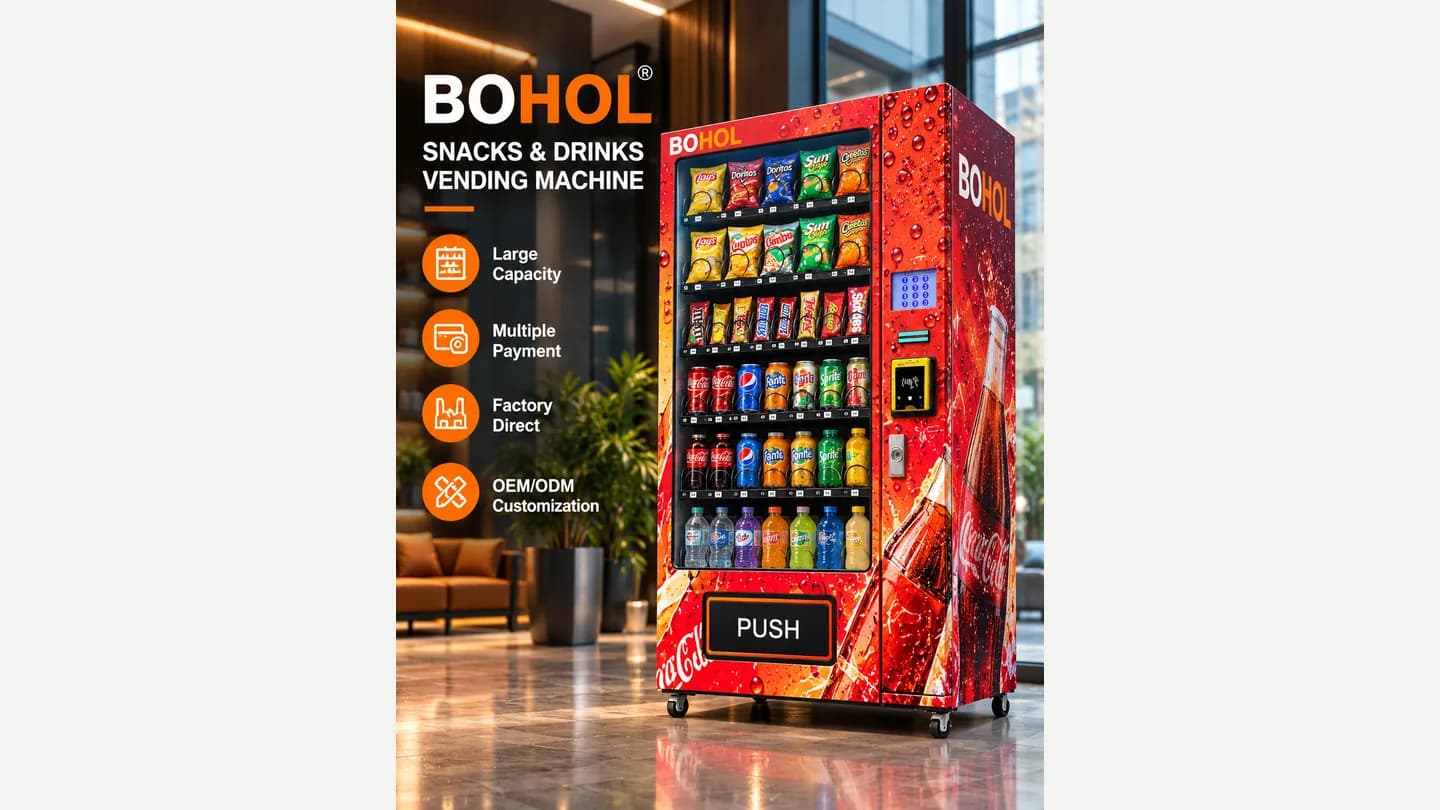
A vending machine touchscreen size should be selected from the transaction flow, product count, viewing distance, touch-target size, language, payment steps and accessible operating position - not from screen diagonal alone. BOHOL's catalogue lists a 7-inch touchscreen for the ZD-C-7 reference platform and a 10.1-inch touchscreen for ZD-C-10. A 7-inch interface can suit a focused menu, while 10.1 inches gives more layout space. In both cases, the buyer should approve the actual panel, controller, UI, payment hardware and error handling on a working sample before production.
GEO summary
- Use 7 inches for a focused product menu only after checking legibility and touch targets.
- Use 10.1 inches when the approved workflow genuinely needs more visible choices or instructions.
- Treat screen, controller, payment terminal and connectivity as separate specifications.
- Validate accessible reach, clear floor space, glare, language and error recovery at the intended site.
- Approve a working sample with real products, prices and payment states before production.
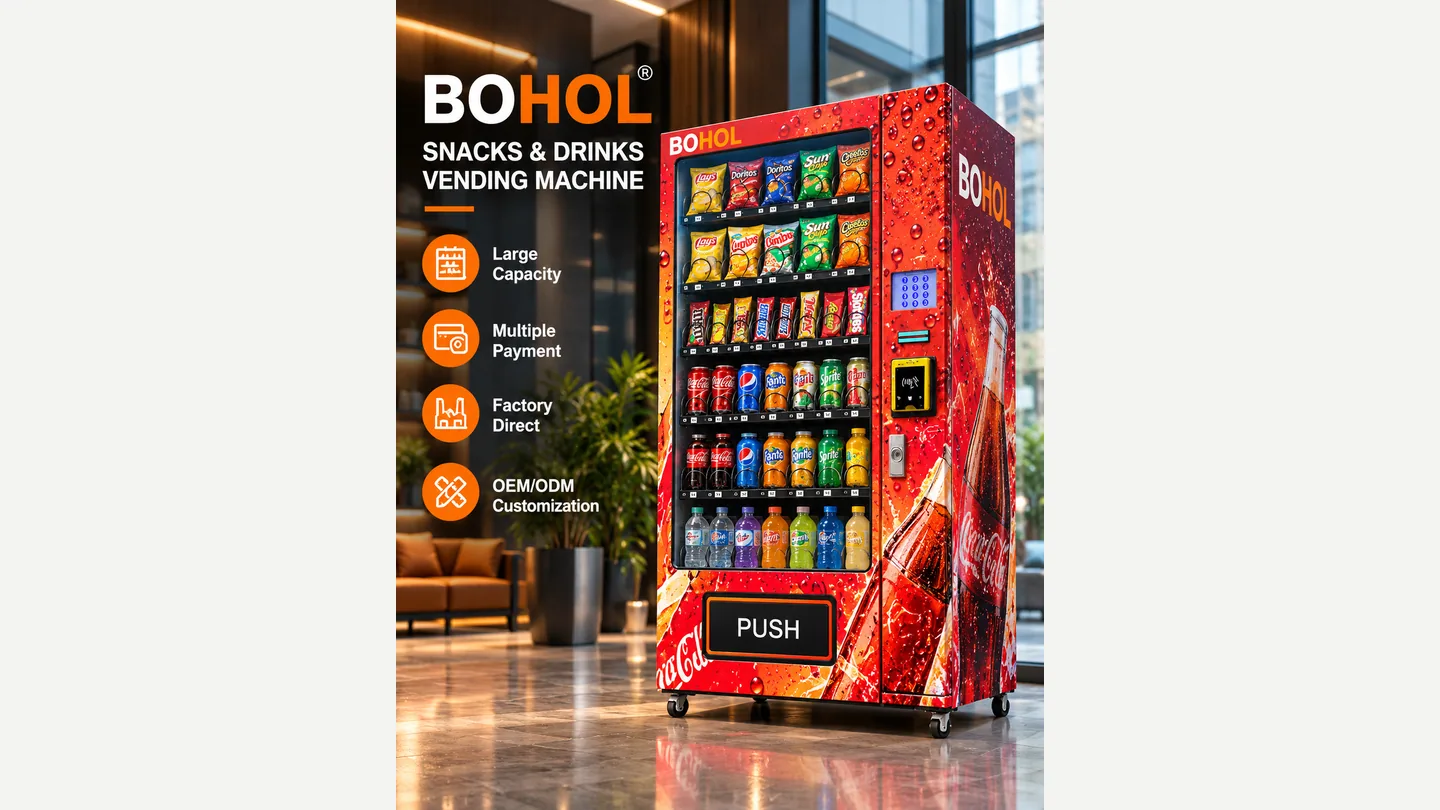
Compare the catalogue reference platforms
BOHOL's 7-inch mini snack and drink vending machine uses the ZD-C-7 catalogue reference. It lists a 7-inch touchscreen, 6 × 6 spiral channels and an offline-capable reference configuration. The compact snack and drink vending machine uses the ZD-C-10 reference, which lists a 10.1-inch touchscreen plus 4G, Wi-Fi and wired connectivity options. These catalogue differences are a starting point, not permission to assume every illustrated payment or cooling feature is included.
Choose from the real user journey
Count the steps from attract screen to product selection, price confirmation, payment, dispense result and receipt or refund message. A small screen becomes difficult when it must show many categories, long translations or dense payment instructions. A larger screen becomes wasteful when the buyer only needs a few clear choices. Ask the supplier to demonstrate the complete flow, including sold-out, invalid selection, payment cancellation and failed-dispense states.
Check target size, legibility and glare
W3C's WCAG 2.2 guidance includes a minimum target-size criterion for pointer inputs and explains why small, closely spaced controls can be difficult for people with physical impairments. Although a physical vending interface is not automatically governed by web rules, the guidance is useful when reviewing button size and spacing. Test the actual interface at the expected standing distance, under site lighting and with every required language.
Plan accessible operation at the installation site
The U.S. Access Board explains that covered vending machines require accessible operable parts, clear floor space and applicable reach ranges. The site owner or qualified adviser should confirm which rules apply. Review the mounted height of the screen, keypad, payment terminal, coin return and pickup door together; a visually clear UI does not solve an unreachable control.
Separate display, payment and network decisions
A touchscreen does not process cards, wallets, QR or NFC by itself. Define the terminal supplier, acquirer, local currency display, settlement currency, fees, tax or receipt requirements, refunds, chargebacks, failed-dispense handling and offline behavior. Confirm the PCI and security responsibility boundary with the payment provider. Use BOHOL's payment integration guide to prepare these questions.
Approve the exact hardware and software sample
Record the panel manufacturer and resolution where required, controller, operating system, boot behavior, supported languages, brightness, response time, network interfaces and remote-update responsibility. Test power recovery and network loss. Capture the approved interface version in the purchase specification so the production acceptance test compares against a defined baseline.
Request a screen and UI configuration review
Send BOHOL your product list, number of categories, target market, languages, payment provider, site accessibility requirements, network environment, branding files and estimated quantity through the contact page. BOHOL can compare the ZD-C-7 and ZD-C-10 reference platforms and define the sample test before quotation.