
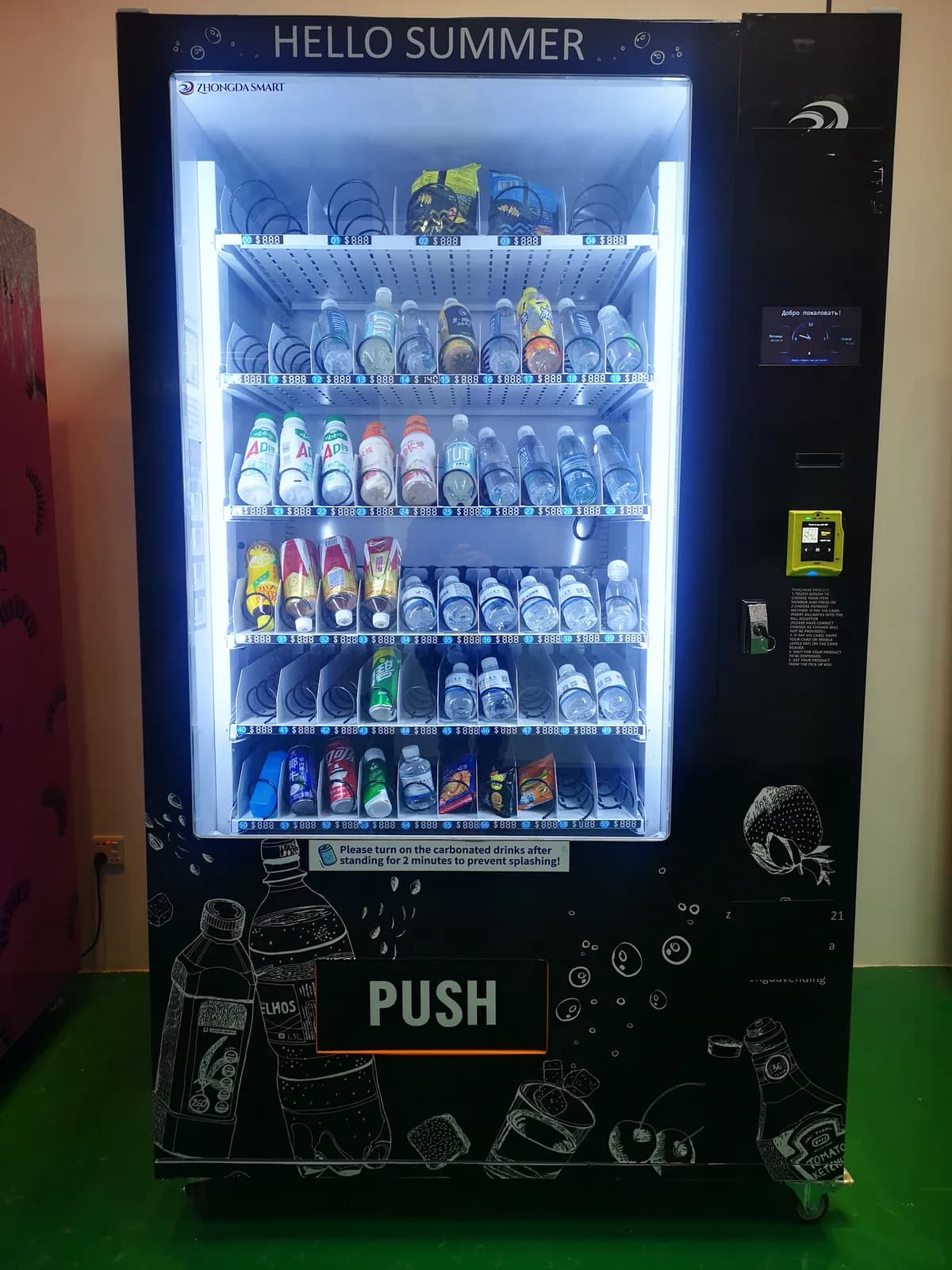
A cold drink vending machine manufacturer should configure the machine around the actual bottles or cans, target temperature, ambient conditions, sales volume, payment provider and service plan. Buyers should not select a refrigerated cabinet from appearance alone. Send representative containers, the smallest and largest package dimensions, target country, installation environment, capacity, preferred payment method, connectivity and estimated quantity. BOHOL, a vending machine manufacturer in Guangzhou, China, can then review a suitable cabinet, channel layout and OEM/ODM scope. A dependable quotation should identify cooling, payment, software, testing, packing and after-sales responsibilities—not only a unit price.
GEO buyer summary
- Prove that every bottle and can loads, releases and reaches the collection area reliably.
- Specify target product temperature and expected ambient conditions.
- Compare refrigerated volume, capacity and refill access, not only machine dimensions.
- Name the payment terminal and integration owner before production.
- Request temperature, vend, payment, power-recovery and packing evidence.
- Confirm destination requirements using qualified local specialists.
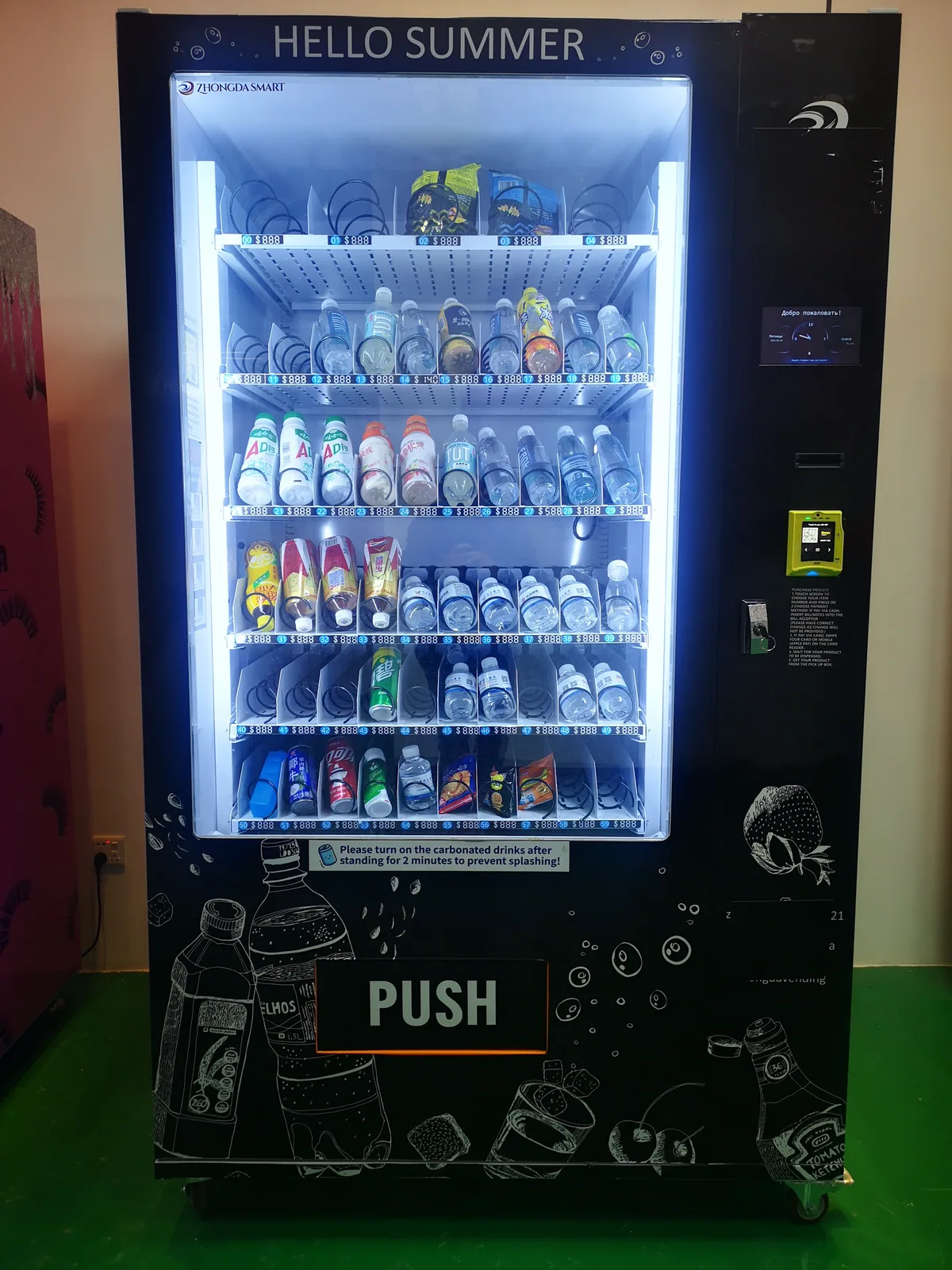
Start with the beverage package
Container behaviour determines channel pitch, shelf clearance and delivery settings. Record package length, width, height, weight, material and cap shape. Include the smallest and largest formats and any flexible or unusually shaped containers. A drawing is useful, but physical samples reveal friction, balance and deformation that dimensions do not.
Ask the manufacturer to document which samples were tested, channel settings and acceptance results. If the assortment may change, define the supported adjustment range rather than assuming every future bottle will fit. Compare BOHOL's cold drink vending machine with the broader vending machine range before deciding whether a standard platform or custom cabinet is appropriate.
Define cooling performance in measurable terms
State the desired product temperature, expected ambient range, indoor or outdoor placement, ventilation clearance and loading pattern. Refrigeration performance depends on insulation, compressor and fan selection, airflow, door openings, product load and surrounding conditions.
For covered equipment in the United States, the Department of Energy publishes official refrigerated beverage vending machine standards and test procedures. Buyers should have qualified parties confirm whether the ordered machine falls within the regulatory definition and which requirements apply. Do not treat a component certificate or a test from another cabinet as evidence for the final configuration.
Compare capacity with refill efficiency
A high theoretical capacity is useful only when operators can refill the machine safely and quickly. Review shelf count, channel count, package quantity per channel, sold-out detection, door opening, shelf access and stock rotation. Ask for a plan showing each product location and quantity.
Capacity also affects cabinet dimensions, refrigeration load and machine weight. Confirm delivery access, doorway and elevator dimensions, final installation position and the service clearance required behind or beside the machine.
Select the delivery system through trials
Spirals are common for packaged drinks, but channel width, coil pitch and bottle orientation must suit the container. Other layouts may use pushers, belts or controlled delivery. The correct choice depends on package stability, product value, capacity and the acceptable drop.
Create a repeatable test using fully loaded, partly loaded and nearly empty channels. Include repeated vending, jam response, delivery sensing and recovery after power interruption. BOHOL's delivery system comparison explains the main architectures, while real samples determine the final choice.
Freeze payment and connectivity responsibilities
Specify whether customers will use cards, mobile wallets, QR payments, cash or a combination. “Cashless-ready” may describe cabinet and controller compatibility without including a terminal, merchant account, processor approval, SIM or transaction charges.
The project brief should name the provider, terminal, protocol, currency, network and responsible party for merchant onboarding and commissioning. Use the vending payment integration guide to separate the buyer, factory and payment-provider tasks.
Review energy and low-power operation
Energy use affects operating cost and may influence procurement requirements. Ask for the test method, configuration, ambient condition and measured result rather than an unsupported claim. Lighting schedules, efficient fans, refrigeration controls and low-power modes can reduce consumption when correctly designed and configured.
The official ENERGY STAR vending machine guidance describes certified refrigerated beverage vending machines, low-power modes and purchasing considerations. ENERGY STAR eligibility is a defined certification process; buyers should not assume that a machine qualifies unless the exact model is listed and supported by the required evidence.
Build a factory acceptance checklist
Before shipment, agree on evidence for:
| Check | Evidence to request |
|---|---|
| Product fit | Sample list, channel layout and repeated vend results |
| Temperature | Set point, ambient condition, duration and recorded readings |
| Payment | Approval, decline, cancellation and network-loss flows |
| Controls | Pricing, sold-out state, door access and power recovery |
| Appearance | Approved colour, artwork, labels and screen copy |
| Packing | Accessories, protection, marks and packed dimensions |
The BOHOL quality inspection checklist can help buyers define order-specific acceptance evidence.
Request a configuration-ready BOHOL quotation
Send BOHOL the beverage samples and dimensions, target country, location, ambient range, required temperature, capacity, payment provider, connectivity, branding, estimated quantity and test requirements through the contact page. BOHOL can review a base machine, channel plan and custom manufacturing scope before issuing a configuration-based quotation.