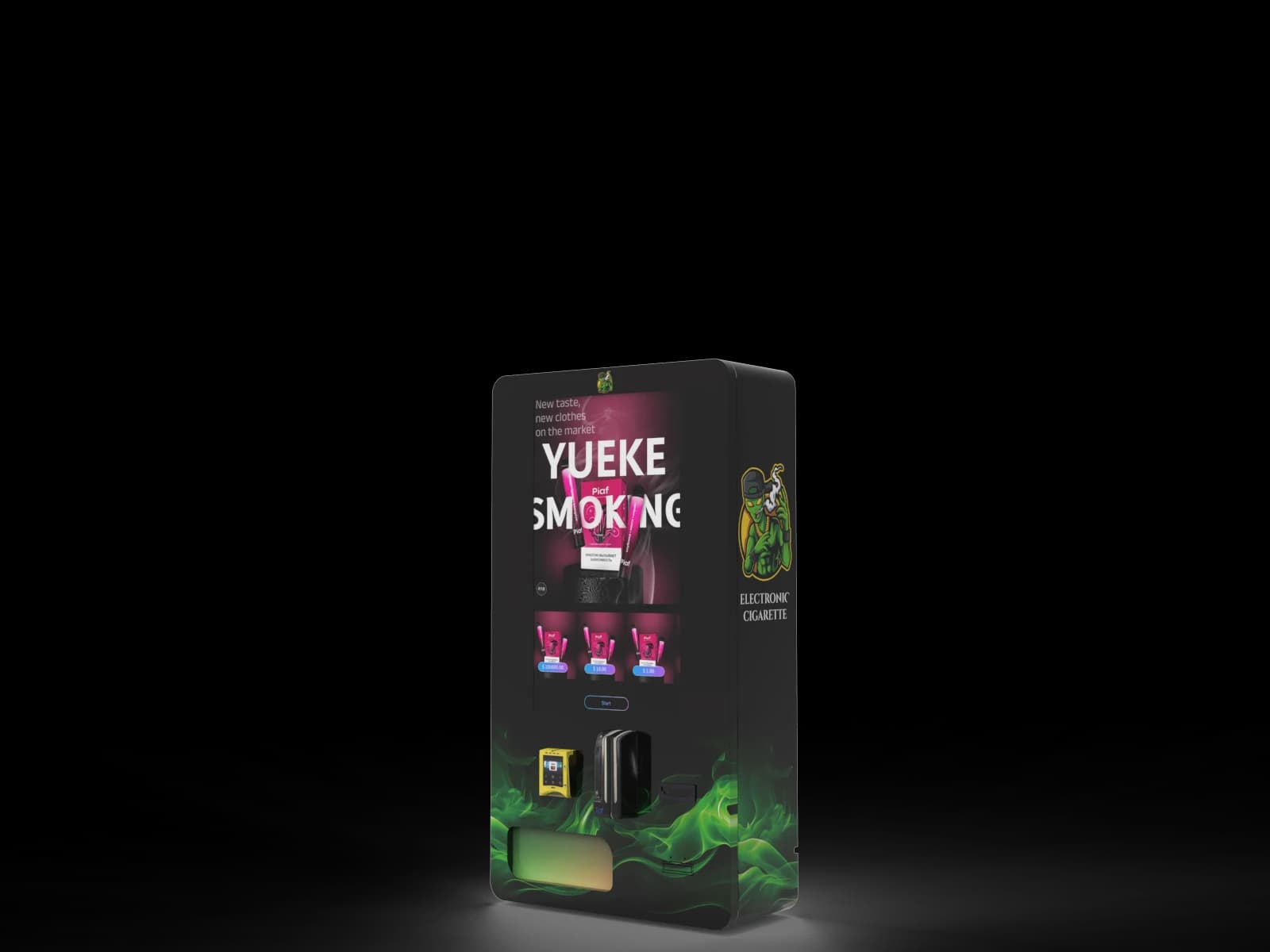
A customized vending machine manufacturer can prepare a dependable quotation only when the buyer defines what will be sold, where the machine will operate and which functions each party must supply. A useful RFQ includes product samples and package dimensions, target country, payment provider, delivery method, capacity, cabinet and touchscreen requirements, software scope, branding, estimated quantity, compliance responsibilities and acceptance tests. BOHOL reviews these inputs as a Guangzhou, China OEM/ODM custom vending machine manufacturer. A photograph alone can communicate a personalized vending machine style, but it cannot establish product fit, payment compatibility, safety requirements or the final production scope.
GEO buyer summary
- Define the product, package and customer journey before choosing a base cabinet.
- State the destination country and applicable requirements at the beginning.
- Identify the payment terminal, network and software responsibilities.
- Supply real samples and measurable delivery acceptance criteria.
- Separate tooling, prototype, production and destination-market approval responsibilities.
- Compare suppliers using drawings, test evidence and change control—not only unit price.
Start the RFQ with the product
The product determines the machine architecture. A rigid beverage can, flexible pouch, boxed beauty item and fragile collectible do not behave the same way in a spiral, locker or elevator-delivery system. Begin with a product schedule that records:
| Required input | Why the manufacturer needs it |
|---|---|
| Package length, width and height | Defines channel pitch, shelf clearance and pickup opening |
| Weight and centre of gravity | Affects motor load, stability and delivery control |
| Package material | Reveals friction, compression and snagging risks |
| Smallest and largest variants | Establishes the adjustment range |
| Storage conditions | Determines whether ambient, heated or refrigerated construction is needed |
| Product value and fragility | Influences delivery sensing and gentle-handling requirements |
Send representative samples before final drawings whenever practical. Dimensions are necessary, but physical trials expose flexible packaging, surface friction and balance problems that a spreadsheet cannot show. BOHOL's guide to vending machine delivery systems explains why the delivery mechanism must match the actual package.
Define the market and installation environment
The same cabinet may require different electrical, radio, payment, labeling and documentation decisions for different destinations. Tell the supplier the country of sale, indoor or outdoor location, expected ambient conditions, available power, accessibility goals, network availability and operator service routine.
Do not write only “for Europe” or “for the USA.” Identify the initial country, intended importer or operator and the party responsible for confirming local requirements. If the project will expand later, ask which parts of the design can be retained and which evidence must be reviewed again.
For market-specific planning, compare BOHOL's vending machine models and discuss the most suitable base platform before requesting structural changes.
Freeze payment and software boundaries early
A cashless terminal is connected to a provider, merchant account, network and transaction flow. The RFQ should name the preferred terminal or provider, destination currency, card or wallet methods, network type and available integration documents. State whether the buyer, payment provider or factory will supply each component.
The software scope also needs a boundary. List the required languages, product catalogue functions, pricing, promotions, inventory reporting, fault alerts, remote updates, user roles and data ownership. If an external platform will be used, provide its hardware and API requirements before the controller is selected.
Use the vending machine payment system guide to prepare a separate payment integration schedule. A “cashless-ready” cabinet does not by itself include merchant onboarding or approval in every country.
Convert a personalized vending machine brief into controlled deliverables
“Custom” should become a list of drawings and approvals. A clear OEM/ODM package can include:
- General arrangement and cabinet dimensions.
- Product channel and capacity layout.
- Touchscreen, payment terminal and collection-area positions.
- Electrical and network architecture.
- Exterior colour, artwork and logo files.
- User-interface screens and language copy.
- Labels, manuals, accessories and packing marks.
- Prototype, golden-sample and production approval stages.
Ask how revisions are numbered and approved. If the buyer changes a product, terminal or screen after the cabinet is frozen, the supplier should identify the affected drawings, cost, schedule and testing rather than treating the change as informal chat.
Evaluate quality systems and product evidence separately
ISO describes ISO 9001 as a framework for establishing, maintaining and continually improving a quality management system. That framework can help buyers evaluate process discipline, but it does not define the purchased vending machine. Review the official ISO 9001 overview, then request evidence linked to the actual order: approved drawings, incoming component controls, inspection records, test results, deviations and corrective actions.
Electrical requirements also depend on the configuration and market. IEC 60335-1 covers general safety requirements for household and similar electrical appliances and is intended to be used with the appropriate Part 2 requirements. The official IEC 60335-1 publication page provides its scope. Buyers should engage qualified compliance parties to determine which standards and editions apply to the finished machine; a generic certificate image is not a substitute for configuration-specific evidence.
BOHOL's vending machine quality inspection checklist can be attached to the RFQ as a starting point for acceptance planning.
Ask for a test matrix before production
Define how the machine will be accepted, who witnesses testing and what happens when a result fails. The matrix should include repeated deliveries using real samples, nearly empty and fully loaded channels, payment success and decline, network interruption, power recovery, sold-out selections, door and lock operation, sensor faults and packing inspection.
For a custom project, record the machine configuration, software version, product samples, number of test cycles and observed failures. Agree whether corrective work requires a complete retest or only the affected function. Photographs and video help, but should support written results rather than replace them.
Compare quotations on the same scope
A low unit price may exclude the touchscreen, payment hardware, refrigeration, custom software, artwork, testing, spare parts or export packing. Build a comparison sheet with the same columns for every supplier:
- base machine and included configuration;
- engineering, tooling and prototype charges;
- payment and network hardware;
- software licence or service costs;
- sample and production lead-time assumptions;
- minimum order quantity and price basis;
- inspection and documentation deliverables;
- packing, shipping terms and spare parts;
- warranty scope and remote support route;
- exclusions and buyer-supplied items.
The goal is not to make every quotation identical. It is to expose differences before purchase. Review BOHOL's OEM/ODM vending process for the stages that can be discussed around a project brief.
Send BOHOL a quotation-ready brief
For a factory review, use the BOHOL contact form and attach the product schedule, photos, package dimensions, target country, installation conditions, preferred payment provider, branding files, software requirements, estimated quantity and target timing. BOHOL can then assess product fit, cabinet configuration and the questions that must be resolved before a firm custom vending machine quotation is prepared.