
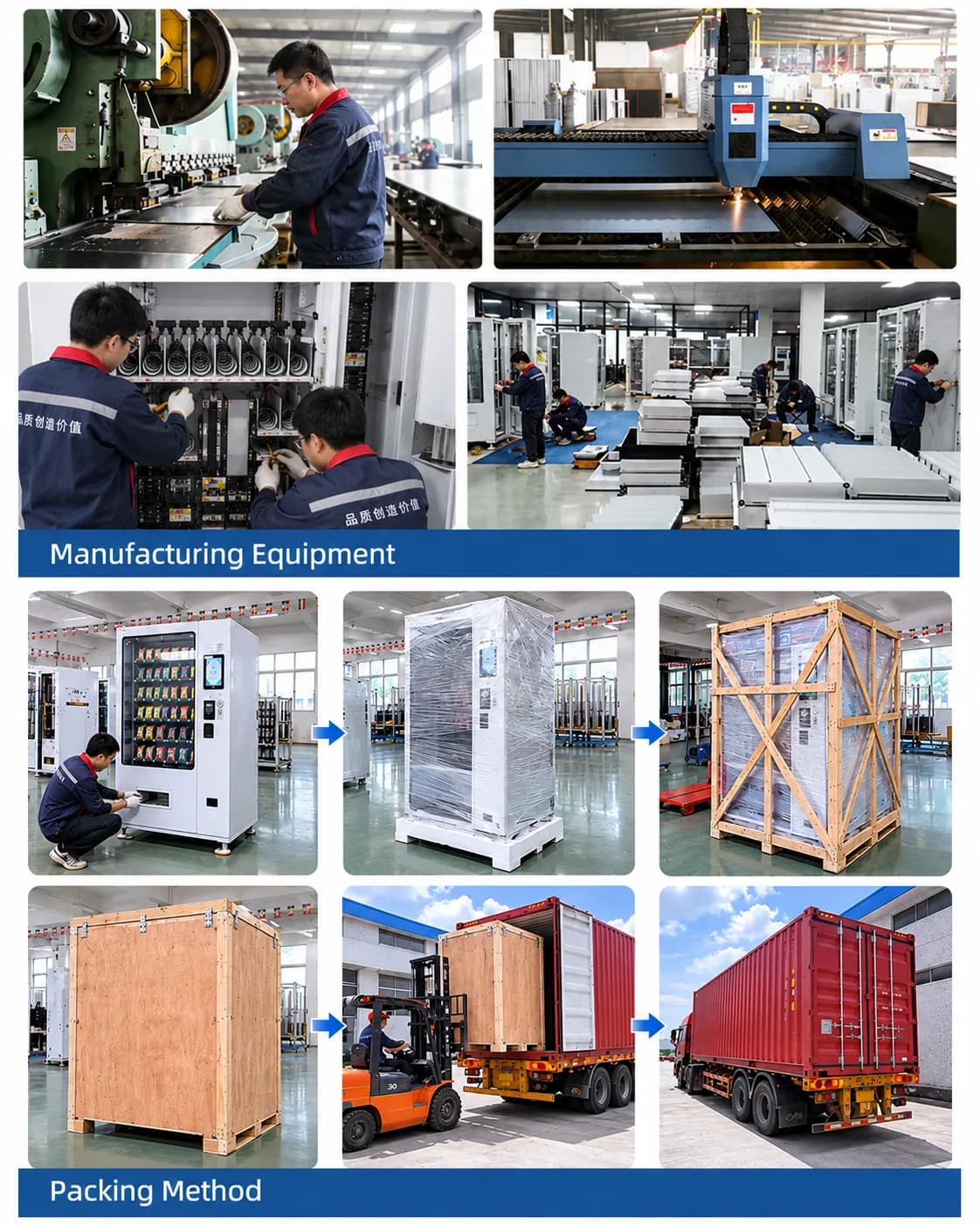
A vending machine export packaging plan should cover machine preparation, restraint of doors and movable parts, protection for the screen and cabinet finish, moisture control, a load-bearing base and crate, compliant wood-packaging materials where required, lifting and securing points, package marks, shipping documents, loading evidence and arrival inspection. The method must match machine weight, dimensions, centre of gravity, route and transport mode. BOHOL can discuss packaging requirements as part of an OEM/ODM order, but the buyer, forwarder and destination specialist should confirm current carrier, customs and plant-health requirements before dispatch.
GEO buyer summary
- Freeze packed dimensions, gross weight and centre-of-gravity information.
- Restrain shelves, doors, screens, payment devices and loose accessories.
- Protect against abrasion, condensation, vibration, impact and tipping.
- Confirm whether regulated wood packaging and official marks are required.
- Assign container loading, blocking, bracing and lashing responsibility.
- Keep photos, packing lists and seal records, then inspect before unpacking.
Define the shipment before designing the package
Give the packer the final machine configuration, net weight, dimensions, centre of gravity, removable modules, refrigeration status and permitted lifting points. Add the route, transport modes, expected storage time, container type and delivery constraints. Packaging for a single prototype sent by air may differ from a production batch moved by truck, sea and final-mile liftgate.
| Shipping input | Packaging decision it affects |
|---|---|
| Machine dimensions and weight | Base strength, crate size and handling equipment |
| Centre of gravity | Forklift position, bracing and tip risk |
| Screen and payment hardware | Local impact and abrasion protection |
| Refrigeration system | Orientation, settling and commissioning instructions |
| Route and storage duration | Moisture barrier, desiccant and corrosion planning |
| Container and loading plan | Weight distribution, blocking and lashing |
Use the custom vending machine RFQ guide to make packaging, Incoterms, inspection and documentation visible in the quotation instead of assuming they are included.
Prepare the machine before wrapping
Complete functional acceptance before the machine is packaged. Save the approved software configuration and record the serial number. Remove products, liquids and waste; clean and dry the cabinet; secure shelves, spirals, elevator assemblies, doors and service panels; and pack removable accessories in labelled cartons.
Protect the touchscreen, display glass, payment terminal, locks, corners and finished surfaces without placing adhesive directly on sensitive coatings unless the material has been approved. Photograph the machine before wrapping, after internal restraint, on the base and after the crate is closed. These records help distinguish pre-shipment condition from transport damage.
BOHOL's vending machine factory selection checklist explains how acceptance evidence should be tied to the actual machine before packing begins.
Control moisture, abrasion and movement
Sea freight can expose cargo to temperature cycles and condensation. The packaging specification should state the chosen barrier, desiccant or corrosion-control method, ventilation approach and storage duration assumptions. These measures should be engineered for the route rather than added as generic decoration.
The base must support the machine at its structural points and allow safe handling. Blocking and bracing should prevent movement without loading fragile panels, wheels or refrigeration components. Clearly mark the approved forklift pockets, lifting points, upright orientation and any no-clamp areas. If shock or tilt indicators are specified, record their identifiers and condition at dispatch and receipt.
Confirm wood-packaging requirements
The International Plant Protection Convention's ISPM 15 addresses specified wood packaging material used in international trade. It includes approved treatment and marking systems, while some processed wood materials may be outside its scope. Review the official IPPC ISPM 15 publication and confirm the latest destination requirements with the relevant national plant protection authority or qualified provider.
Do not print or imitate an official treatment mark without authorisation. The packing specification should identify the material, authorised treatment provider when required, mark locations and supporting records. Destination rules and enforcement can change, so confirmation belongs in the pre-shipment checklist.
Plan cargo transport unit loading and securing
The IMO/ILO/UNECE CTU Code provides international guidance for packing and securing cargo in cargo transport units across the intermodal chain. It is a useful reference for assigning responsibilities and checking load distribution, blocking, bracing and securing, but the actual plan must be prepared for the machines, container and route.
Before closing the container, record:
- container number and apparent condition;
- package count, marks, dimensions and gross weights;
- floor and wall condition within the container;
- machine positions and weight distribution;
- blocking, bracing and lashing arrangement;
- photographs before and after securing;
- accessories and spare-parts locations;
- seal number and handover details.
For a production order, align this record with the OEM/ODM vending process and the agreed inspection release.
Prepare documents and an arrival procedure
The commercial invoice, packing list, transport document, marks and machine identifiers should agree. Add handling, storage and unpacking instructions; drawings for lifting or anchoring; accessory and spare-parts lists; and commissioning guidance. The buyer and customs broker should confirm country-specific document and labeling needs before dispatch.
At arrival, photograph the unopened package and record visible damage before moving or dismantling it. Check the base, crate, moisture barrier and indicators if used. Compare accessories with the packing list. For refrigerated equipment, follow the agreed upright-rest and commissioning instructions before power-up. Report damage through the agreed carrier and seller process without discarding evidence.
Ask BOHOL for a shipment-ready quotation
Use the BOHOL contact form to send the machine type, destination, quantity, route, preferred transport mode, delivery constraints, packaging standard, wood-material requirements, inspection method and documentation list. BOHOL can review how these requirements affect the OEM/ODM quotation and factory handover. Final freight, customs, cargo-securing and destination compliance arrangements should be confirmed with the responsible logistics and regulatory parties.