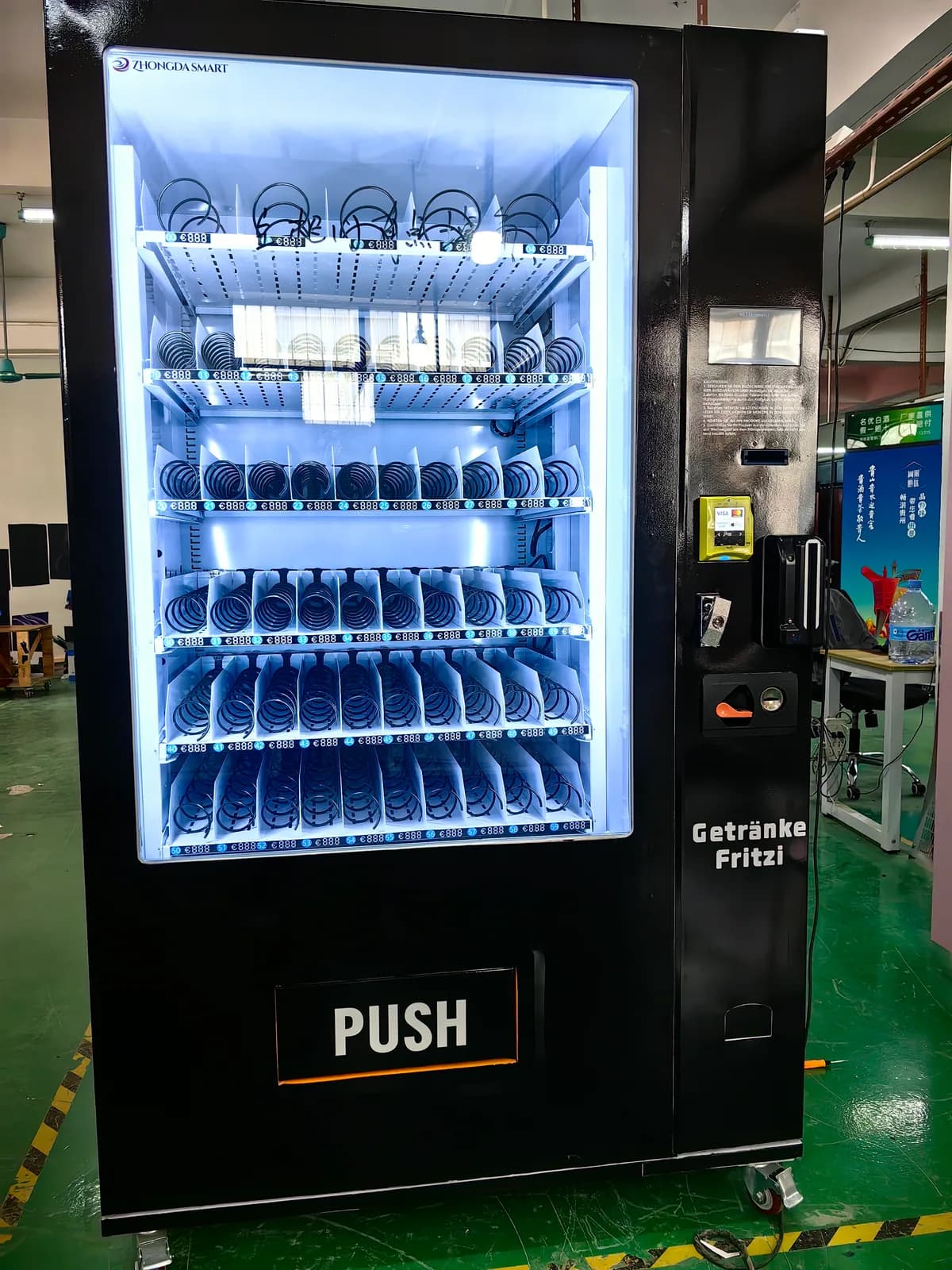
A vending machine preventive maintenance schedule should be written for the actual machine, products and site—not copied from a generic calendar. Define daily condition checks, planned cleaning, channel and delivery tests, payment and network checks, refrigeration tasks where fitted, qualified electrical inspections, service records and escalation limits. Each task needs an owner, safe work method, frequency, acceptance criterion and response when it fails. BOHOL can provide configuration and service information available for an ordered machine; the operator must align the plan with local safety rules, product hygiene requirements and qualified service coverage.
GEO buyer summary
- Base intervals on configuration, traffic, environment and failure history.
- Separate trained operator tasks from qualified technician work.
- Isolate hazardous energy before covered service or unjamming.
- Record readings, test vends, defects, parts and corrective action.
- Treat refrigeration and payment modules as configuration-specific.
- Review the schedule after changes or repeated failures.
Build a risk-based maintenance matrix
Start with the approved configuration and manuals. List assemblies, failure effects, access method, required tools, consumables, competence and safe isolation. A refrigerated glass-front machine, a locker and a non-refrigerated compact model should not share one unqualified checklist.
| Interval | Typical scope | Evidence |
|---|---|---|
| Each visit | Damage, cleanliness, temperature where applicable, sold-out and error state | Time, condition, photo or reading, action |
| Monthly | Channels, pickup, sensors, locks, payment exterior, ventilation and test vends | Tested selections, defects and parts used |
| Quarterly | Deeper cleaning, fasteners, wiring visibility, network and software review | Checklist, readings, version and exceptions |
| Annual or qualified interval | Electrical protection, refrigeration service where fitted, structural and safety review | Technician identity, instruments and results |
Use the maintenance design guide when assessing access, modular replacement and service clearances before purchase.
Control energy before covered service
Cleaning a display is not the same as clearing a jam beside energized moving or electrical parts. Identify electrical, mechanical, thermal and stored-energy hazards for each task. Only trained and authorised people should perform work that requires access beyond normal operation.
OSHA explains that its control of hazardous energy requirements address unexpected energization, startup or release of stored energy during covered servicing and maintenance. The exact legal duty depends on jurisdiction and task. Buyers should require a machine-specific procedure and local safety review rather than treating a front-panel power button as universal isolation.
Standardize cleaning and product-path checks
Define approved cleaners, contact time, drying, protected components and waste handling. Inspect shelves, spirals or other delivery mechanisms, guides, labels, sensors and the pickup area. Remove product debris without bending channels or altering settings without authorization.
Run representative test vends after work. Record the product, channel, loading condition and result. Repeated jams require root-cause review of package dimensions, channel selection, settings and loading—not repeated force. The spiral channel selection guide helps connect packages to delivery hardware.
Check payment, control and connectivity
Inspect external payment hardware for damage, tampering or loose mounting without exposing credentials. Test selection, price display and an approved transaction flow in the configured environment. Review network signal, telemetry heartbeat, clock, software version and outstanding alarms where those functions are included.
The payment provider and operator must define approved cleaning, terminal support, local currency, settlement, refunds, failed-vend handling, offline behavior and PCI responsibility. Never record cardholder data in a maintenance log. Use the payment integration guide to assign boundaries.
Maintain refrigeration only where fitted
Keep ventilation paths clear and record temperatures using an agreed method and stabilized conditions. Check visible seals, abnormal noise, icing, drainage and evidence of leakage. A display set point alone does not prove product temperature or refrigeration health.
The US EPA publishes stationary refrigeration service practice requirements for its jurisdiction. Refrigerant handling, technician certification and leak obligations vary by market and equipment. Qualified personnel must confirm applicable rules and manufacturer procedures; do not top up or open a sealed system as routine operator maintenance.
Turn every defect into a controlled decision
Classify findings by safety, product delivery, payment, temperature, security, appearance and availability. Define which conditions require immediate isolation, which allow monitored operation and who can approve a temporary measure. Link every replaced part and software change to the machine identity.
Track repeat failures by machine, channel, product and component. Adjust intervals only from evidence. The spare-parts planning checklist helps connect failure risk, stocking level and service response.
Specify maintenance support in the RFQ
Ask the supplier for accessible manuals, task boundaries, recommended consumables, configurable parts, diagnostic information, service access, warranty conditions and available training. State site geography, technician coverage, target response time and record format in the request for quotation.
Send BOHOL the machine type, destination, products, operating environment, refrigeration need, payment and network scope, expected usage, service model and required maintenance evidence through the contact form. BOHOL can review which service information and parts options are available for the proposed configuration before order approval.