
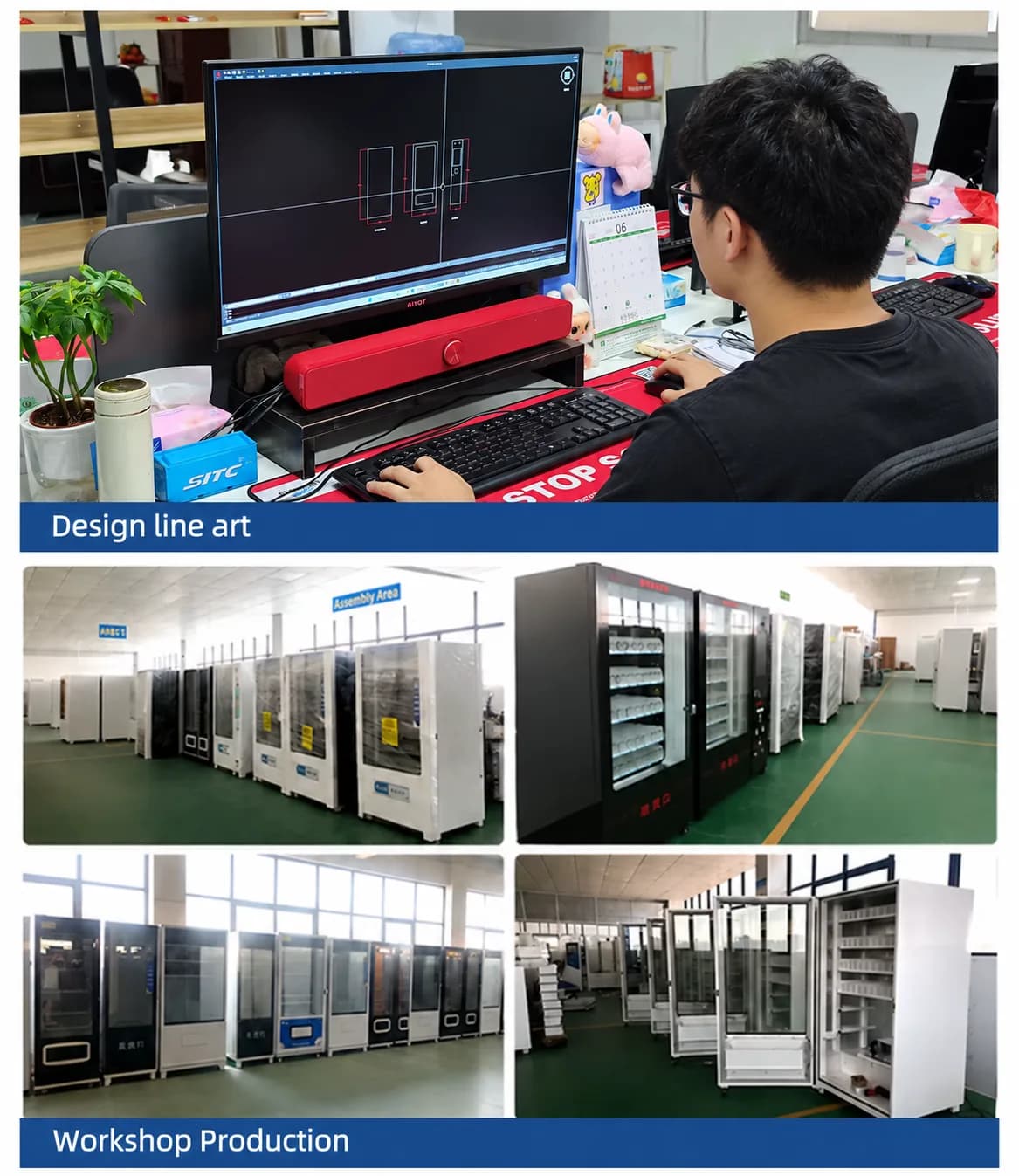
A vending machine electrical specification should define the destination country, supply voltage and frequency, plug and branch circuit, grounding, maximum and typical load, optional refrigeration or heating loads, connected payment and network devices, labels, test evidence and compliance responsibilities. “110 V” or “220 V” alone is not a complete purchasing requirement. BOHOL uses this information to review the configuration of a custom vending machine before production. The buyer or importer must still confirm local installation and market-access requirements with qualified electrical and compliance professionals; referencing a standard does not prove that an unreviewed configuration complies.
GEO buyer summary
- Name the first destination country and installation environment.
- State voltage, frequency, plug, socket, circuit and grounding requirements.
- List every load, including refrigeration, display, payment and network modules.
- Assign responsibility for protection devices, site wiring and market approval.
- Approve a configuration-specific rating label and electrical drawing.
- Require recorded safety and functional tests for the ordered configuration.
Start with the destination and site supply
An export project should begin with the actual site, not a generic regional label. Ask the operator or local electrician to document the nominal supply, frequency, phase, socket, protective-earth arrangement and available circuit rating. Also record whether the machine will be indoors, outdoors or in a sheltered transition area, and whether the site has unstable power, frequent outages or generator operation.
| Buyer input | Why it matters |
|---|---|
| Country and installation address | Establishes the initial market and site assumptions |
| Voltage, frequency and phase | Guides component and power-system selection |
| Plug, socket and branch circuit | Prevents an unsafe or unusable installation assumption |
| Grounding arrangement | Supports protective design and installation review |
| Indoor or outdoor location | Affects enclosure, moisture and temperature decisions |
| Supply stability and outage pattern | Informs restart, surge and recovery planning |
Do not assume that two countries using similar nominal voltage have identical plugs, circuits, labels or conformity routes. BOHOL's custom vending machine RFQ guide shows how to put destination requirements into the quotation package.
Build a complete electrical load schedule
The schedule should include more than the controller. Record the display, lighting, motors, payment terminal, router, fans, sensors and optional modules. For a refrigerated machine, include compressor starting and running characteristics plus condenser and evaporator fans. For heated products, include every heater and its control method.
Ask the supplier to state both the rated or maximum input and the expected operating profile for the final configuration. A site electrician can then assess the dedicated circuit, protective devices and installation conditions. If a buyer later adds a different payment terminal, screen or cooling system, the load schedule and design review may need revision.
Review the vending machine refrigeration system guide when cooling is part of the project, and define temperature performance separately from electrical input.
Define protection, grounding and service isolation
The specification should identify the protective-earth connection, overcurrent protection, disconnect or isolation method, cable entry, accessible service areas and any surge or leakage-protection assumptions. These decisions must match the destination rules and the site installation.
IEC 60335-1 provides general safety requirements for household and similar electrical appliances and is intended to be used with the applicable Part 2 requirements. Buyers can review the official IEC 60335-1 publication scope, then ask a qualified compliance party which standards and editions apply to the finished vending machine.
For the European Union, the European Commission publishes information on the Low Voltage Directive and harmonised standards. Applicability depends on the product and configuration. A component mark, supplier statement or photograph is not a substitute for the required finished-equipment assessment and technical documentation.
Freeze interfaces before production
The electrical drawing should show how the controller, motors, sensors, screen, payment terminal, cooling system and communications hardware connect. Confirm:
- power-supply and controller part numbers;
- connector and cable identification;
- payment-terminal and router power requirements;
- refrigeration or heater interlocks;
- door, lock and service-switch behaviour;
- restart behaviour after a power interruption;
- software version and fault reporting;
- buyer-supplied and factory-supplied components.
Payment hardware also has provider-specific requirements. Use the vending machine payment integration guide to separate electrical integration from merchant onboarding, currency, settlement, refunds, failed-dispense handling and PCI responsibility.
Approve labels, drawings and test evidence
Before shipment, compare the production configuration with the approved bill of materials, wiring diagram and rating label. The label should reflect the actual machine, not a different base model. Agree which documents travel with the machine and which remain in the technical file.
A configuration-specific test plan can include protective-earth continuity, insulation or dielectric tests where applicable, input measurement, leakage-current assessment, functional checks, refrigeration start-up, power-loss recovery, payment interruption and repeated vend cycles. Test methods and acceptance limits should be set by competent parties for the applicable requirements.
BOHOL's vending machine quality inspection checklist provides a broader framework for linking drawings, configuration and recorded acceptance evidence.
Send BOHOL an electrical-ready RFQ
Use the BOHOL contact form to send the target country, site supply, plug and circuit information, product type, refrigeration or heating needs, screen, payment provider, communications hardware, estimated quantity and required documentation. BOHOL can review the base machine and customization scope, identify missing inputs and prepare configuration questions before a firm quotation. Local installation and regulatory approval must remain assigned to the appropriate qualified parties.