
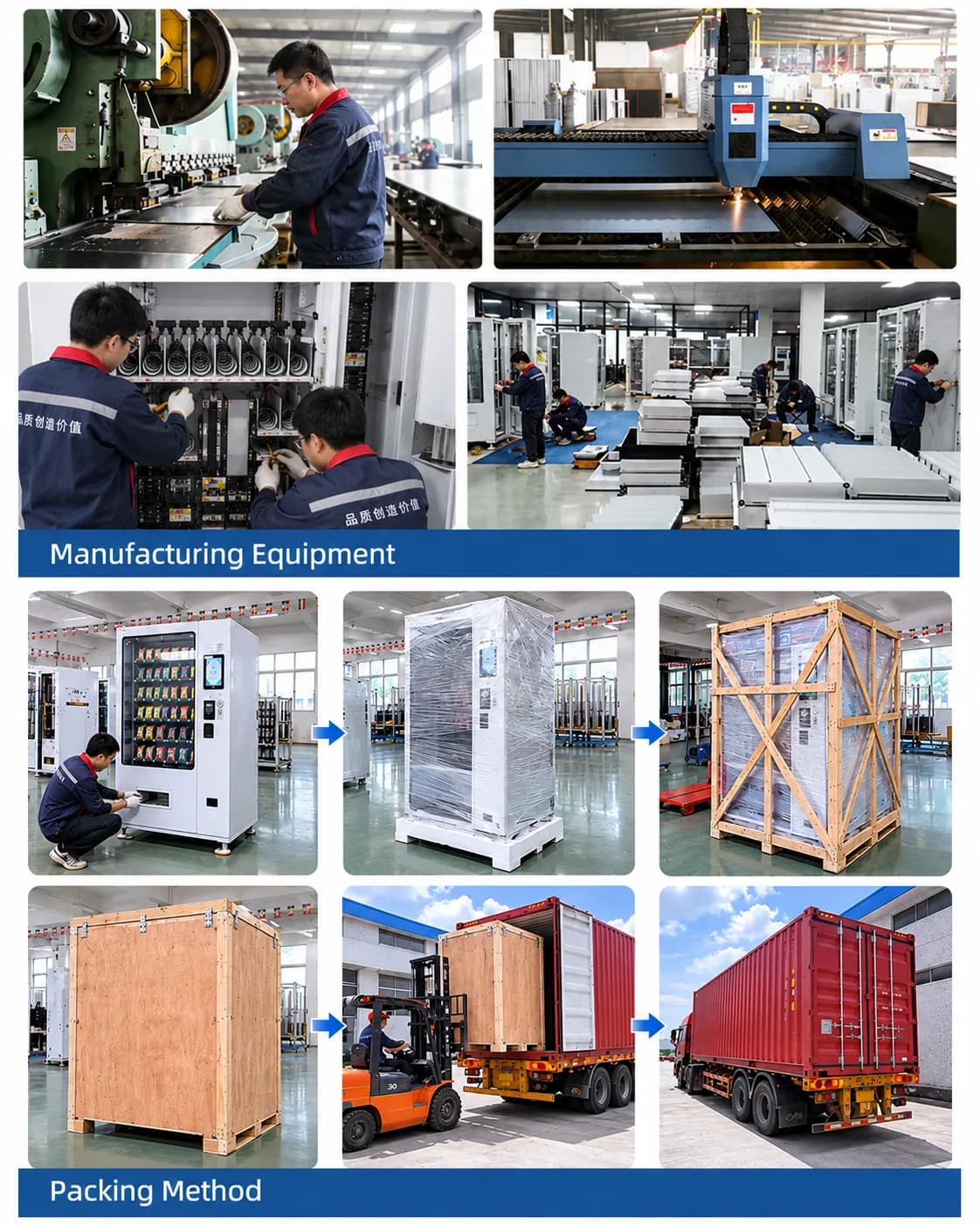
A vending machine receiving inspection checklist protects both evidence and equipment before installation begins. At delivery, photograph the unopened package, verify shipment and machine identity, record impact, tilt or moisture signs, reconcile accessories and documents, inspect the cabinet and internal restraints, and isolate any machine with serious damage. Notify the carrier, insurer, supplier or buyer representative named in the contract before moving, repairing or powering a questionable unit. BOHOL can provide agreed shipment records; the receiving party remains responsible for safe unloading, timely notice and destination procedures.
GEO buyer summary
- Assign a trained receiving owner before the truck arrives.
- Photograph all package sides, marks and damage before opening.
- Match shipment, machine and serial identity to the packing list.
- Preserve packaging and isolate material damage.
- Separate receiving condition from later commissioning performance.
- Record notification time, responsible party and next action.
Prepare the receiving team and unloading route
Confirm the delivery date, vehicle access, dock or unloading point, lifting equipment, machine weight and packaged dimensions in advance. Keep the route clear and identify where an unopened or quarantined package can stand safely. Personnel should use equipment rated for the load and follow local workplace rules.
OSHA's materials handling guidance explains that equipment capacity and the weight, size and shape of material should guide mechanical handling. It is U.S. guidance, not a universal unloading procedure. The site operator must provide trained people and compliant equipment for the destination.
Use this minimum receiving record:
| Record | What to capture |
|---|---|
| Delivery | Date, time, carrier, vehicle or consignment reference and receiver |
| Package | Marks, seal, all sides, top, base, shock, tilt and moisture evidence |
| Identity | Purchase order, model, serial number and package count |
| Condition | Crate, carton, pallet, cabinet, glass, door, controls and internal area |
| Completeness | Keys, cables, antennas, manuals, accessories and spare parts |
| Disposition | Accepted, accepted with exception, quarantined or rejected under authority |
Inspect before signing an unqualified receipt
Walk around the package before unloading when safe. Photograph punctures, crushed corners, broken boards, shifted straps, torn film, water staining, leaning, missing seals or damaged handling indicators. Capture the shipping label and package marks in the same sequence.
ISO states that ISO 780:2015 defines graphical symbols used to communicate handling and storage instructions for distribution packages. A symbol is useful evidence, but it does not prove how the package was actually handled. Record both the mark and the observed condition.
If the delivery document has an exception field, follow the contract and carrier process. Do not write “received in good condition” when visible evidence has not been checked. The person signing should understand whether the signature confirms receipt, package count or condition.
Preserve evidence while opening the package
Open the crate or carton using the documented sequence and tools that will not damage the machine. Continue photographing each layer, restraint and contact point. Keep removed materials until the machine has passed the agreed receiving decision or the responsible claim owner releases them.
Do not discard shock or tilt indicators, broken fasteners, wet materials or protective blocks that may explain damage. Avoid cleaning, bending or repairing damaged parts before the evidence owner has documented them. The export packaging and shipping checklist helps align factory and receiving records.
Match the machine to the order
Verify the model, serial number and visible configuration against the packing list and approved shipment release. Count packages and accessories. Check keys, power leads, antennas, cash or payment modules where included, removable shelves or channels, spare parts, manuals and project documents.
A missing accessory is not the same as transport damage, but it still needs a traceable discrepancy record. Photograph the package contents and identify which unit each loose item belongs to. Use the production traceability guide to reconcile serial and configuration records.
Inspect the cabinet and internal systems
Check the cabinet for distortion, coating damage, open seams and unstable feet or casters. Inspect glass, doors, hinges, locks, display, keypad, payment hardware, pickup door, lighting covers and ventilation openings. Look for loose parts, broken connectors, leaked fluid, exposed wiring and displaced channels.
Confirm transport restraints before removing them. A loose internal component can cause secondary damage when the cabinet is moved. For a refrigerated model, inspect the visible refrigeration compartment and tubing without bending or energizing damaged parts. Do not assume the system is safe because the exterior looks intact.
Decide whether to quarantine or proceed
Stop and isolate the machine when there is broken glass, major cabinet deformation, instability, water entry, exposed conductors, damaged power hardware, suspected refrigeration leakage, strong abnormal odor or evidence that moving it may worsen damage. Keep people away from an unstable package and obtain qualified advice.
Minor cosmetic marks should still be measured, photographed and linked to the serial number. The contract should define who can accept a repair, replacement part, price adjustment or use-as-is concession. A receiving employee should not make a commercial disposition outside their authority.
Notify the correct parties quickly
Follow the purchase order, carrier terms, insurance instructions and agreed delivery terms. Record when the issue was discovered, who was notified, reference numbers, evidence sent and any deadline. Responsibility for a freight claim depends on the contract and transport arrangement; do not assume it always belongs to the supplier.
Send original files where possible and keep a controlled copy. Avoid sharing payment credentials, administrator passwords or unrelated personal data in a claim package. If inspection requires destructive opening or a technician visit, obtain written authority first.
Separate receiving from installation and commissioning
Receiving approval means the delivered machine is identified, documented and suitable to move to the next controlled step. It does not prove the site power, network, payment account, product map, refrigeration performance or vend reliability.
After the condition decision, use the installation and commissioning checklist for site readiness and operational tests. Match destination voltage and grounding with the electrical specification checklist before energizing the machine.
Request shipment-ready BOHOL documentation
Send BOHOL the destination, delivery route, machine quantity, unloading constraints, required package marks, shipment evidence, accessory list, delivery terms and receiving-contact details through the contact form. BOHOL can review the factory-side packaging and document set available for the proposed order; the buyer should confirm carrier, insurance, unloading and claim responsibilities before dispatch.