
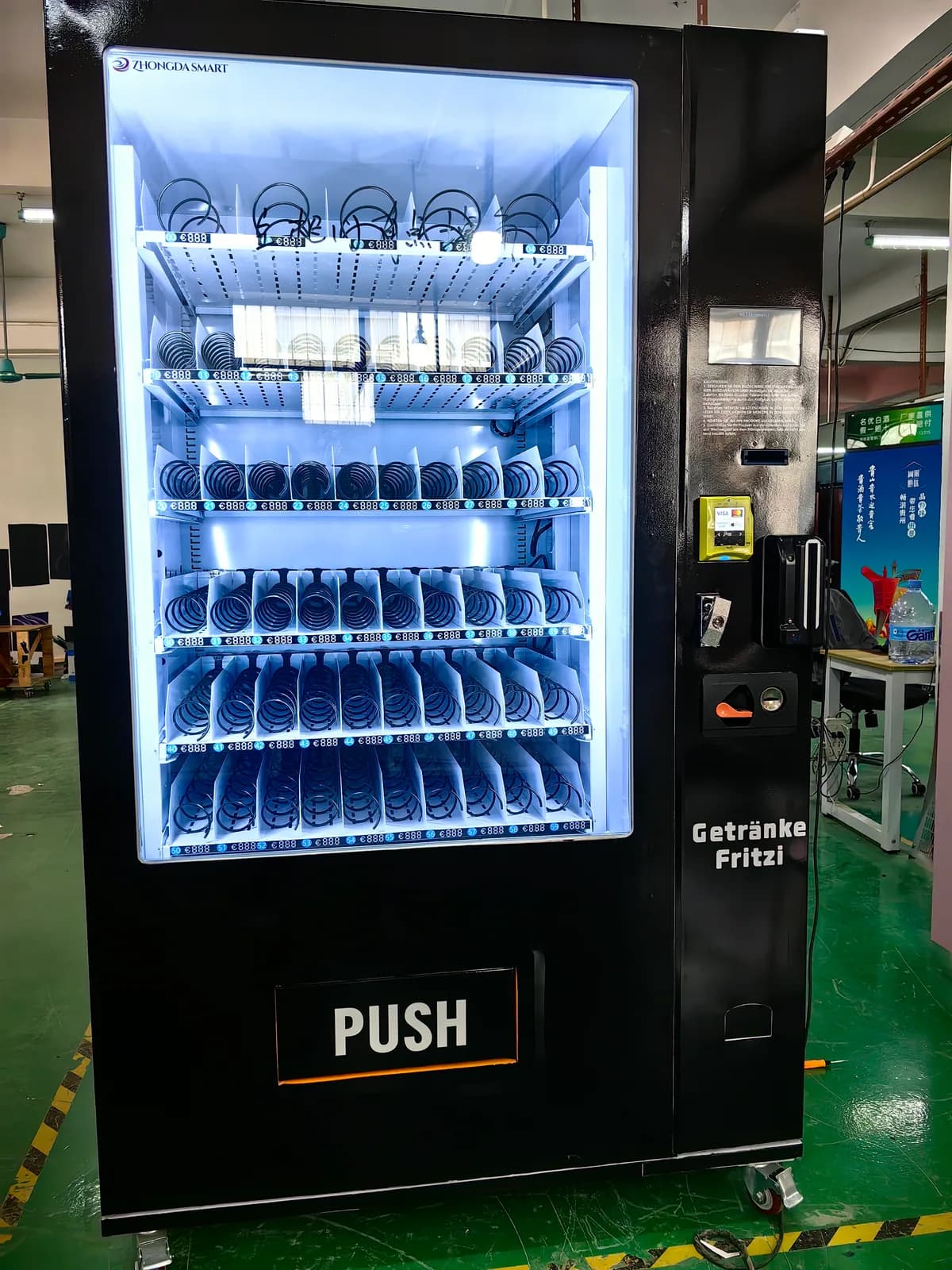
A vending machine commissioning checklist turns delivery into controlled commercial handover. Before sales begin, verify the received machine, approved position, stability, service clearance, supply voltage and grounding, network, payment configuration, product map, prices, every vend path, failed-vend handling, cooling where fitted, operator permissions and training. Record each result against the machine serial number and software version, then assign every open item. BOHOL can align factory records and agreed configuration with the handover file; the buyer and qualified local contractors remain responsible for the site, permits and destination rules.
GEO buyer summary
- Freeze the site and configuration before dispatch.
- Inspect the package and machine before signing an unqualified receipt.
- Match the outlet and protective devices to the machine nameplate.
- Test every selection, payment outcome and recovery path.
- Record temperatures only for models ordered with refrigeration.
- Hand over credentials, documents, spare parts and escalation contacts.
Define acceptance before the machine ships
Commissioning is easier when the purchase order identifies the acceptance owner, test cases, tolerances, evidence and remedy process. Create one matrix that links the approved machine configuration to the test that proves it works.
| Acceptance group | Evidence to retain |
|---|---|
| Identity and condition | Model, serial number, package photos, damage notes and accessory count |
| Site readiness | Approved location, floor and clearance check, power and network confirmation |
| Product setup | Selection map, product dimensions, prices, capacity and sold-out settings |
| Payment | Provider approval, enabled methods, settlement currency and test transaction records |
| Delivery | Successful vends, drop detection where fitted, failed-vend and recovery results |
| Handover | Training attendance, manuals, credentials, spares, open-item log and signatures |
Use the vending machine electrical specification checklist before ordering. It captures destination inputs that should not be improvised at installation.
Inspect delivery before moving the machine
Compare the package marks, model and accessory list with the approved shipping file. Photograph the crate or carton before opening, then record visible impact, tilt or moisture evidence. If damage is suspected, preserve packaging and notify the carrier under the agreed procedure before the machine is operated.
After unpacking, check the cabinet, glass, doors, locks, shelves, channels, payment hardware, antennas, power lead and removable accessories. Confirm that transport restraints are removed only as directed. Reconcile the machine and spare parts against the export packaging and shipping checklist.
Approve the final location
Confirm that the floor is level, stable and suitable for the loaded machine. Maintain the manufacturer-agreed ventilation and service clearances. The selected location should provide a safe delivery route, operator access and a usable customer approach without blocking exits, circulation paths or building services.
Where accessibility rules apply, assess clear floor space, reach and operation for the actual controls. The U.S. Access Board's guide to operable parts explains U.S. ADA reach and operation concepts; it is not a universal specification. Buyers must confirm the law for the destination and site.
Record the agreed anti-tip, anchoring or stabilisation method. Do not drill, bolt or modify the cabinet without confirming the structure, utility locations, warranty implications and site authority.
Verify electrical safety before energising
Match the machine nameplate to the measured supply voltage and frequency. Confirm grounding, circuit capacity, protective devices, outlet type and cable route with a qualified local electrician. Do not use an improvised adapter, overloaded extension or unapproved voltage converter.
OSHA lists U.S. general-industry electrical standards in 29 CFR 1910 Subpart S. Other markets use different laws and standards, so the importer and site owner must identify the applicable requirements. Commissioning evidence does not replace inspection or approval by the responsible authority.
Once approved, energise the machine according to the supplied sequence. Check for abnormal noise, smell, heat, error codes or leakage before loading products.
Load the approved product plan
Use the signed selection map rather than filling channels by appearance. For each selection, record the product, price, channel width or spiral, capacity, expiry-control practice and any temperature requirement. Test the actual package dimensions and weight; nominal product names are not enough.
Run at least one controlled vend from every configured selection, including the highest, lowest and most difficult package positions. Confirm clean release, product travel, pickup access and sold-out detection. Adjust only within the approved configuration and record changes. The spiral and channel selection guide helps buyers prepare this mapping before the site visit.
Commission payment and failure handling
Payment activation should use the live merchant and provider configuration approved for the destination. Confirm settlement currency, prices, taxes if applicable, receipt behavior and enabled card, mobile-wallet, QR, NFC, cash or other methods. Availability depends on the selected hardware, acquirer and local market.
Run approved, declined and cancelled transactions. Create a controlled failed-vend test and verify the documented void, reversal or refund route. Test recovery after a network interruption without assuming that every terminal supports offline authorization. Keep credentials and payment data out of photographs and handover sheets, and confirm PCI responsibilities with the payment provider. The payment integration guide explains the buyer decisions behind these tests.
Check cooling, communications and alarms
For a refrigerated model, allow the cabinet to stabilise under the specified test conditions. Record set point, measured product-zone temperatures, ambient conditions, door-open effects and alarm behavior. Do not publish a universal temperature range when the product, cabinet and destination requirements differ.
For a connected machine, verify signal strength, time zone, device identity, reporting intervals, remote inventory or alarm functions included in the order, and recovery after a controlled connection loss. Compare the portal record with physical vends. The remote monitoring requirements guide provides a procurement checklist for ownership, retention and support boundaries.
Complete operator handover
Train named operators to load products, clear routine jams safely, clean customer-contact areas, reconcile cash if fitted, review alerts and escalate faults. Provide only the access level each role needs. Change default credentials where supported, store recovery information securely and record the approved software and configuration versions.
The signed handover pack should contain:
- model and serial record;
- approved configuration and selection map;
- completed test sheet and exceptions;
- manuals and preventive-maintenance schedule;
- spare-parts and key inventory;
- payment and connectivity responsibility contacts;
- warranty start point and escalation route;
- photographs that exclude credentials and personal data.
Open items should have an owner and deadline. Do not sign unconditional acceptance for a material defect that has not been documented and assigned.
Request a commissioning-ready BOHOL quotation
Send BOHOL the target country, proposed location, machine type, product list, payment methods, power and network details, refrigeration need, accessibility requirements, quantity and acceptance plan through the contact form. BOHOL can review the factory-side configuration and documents available for the order. The buyer should appoint qualified local contractors and confirm destination compliance before installation.